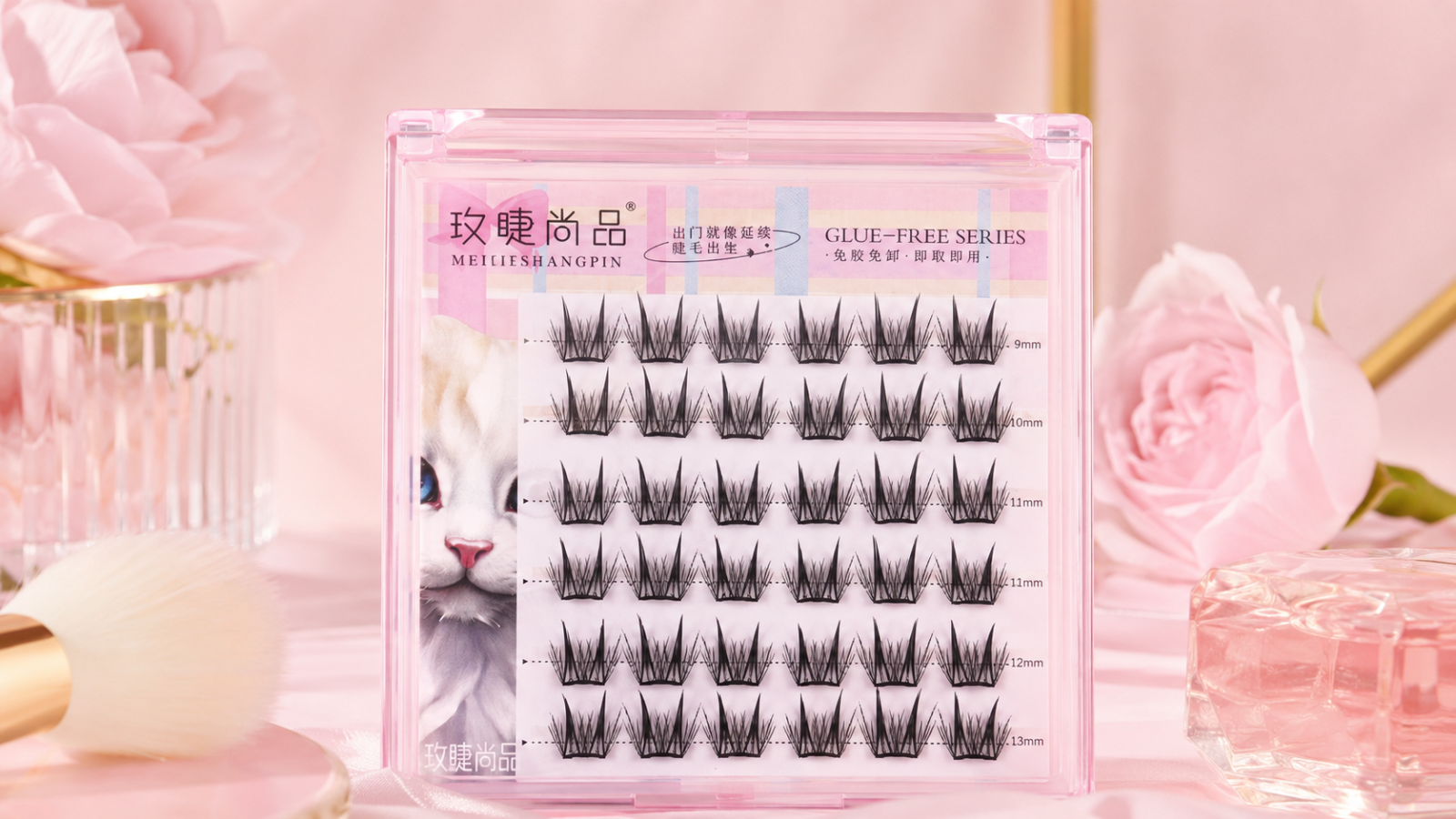
Natural cluster lashes are a practical choice for customers who want more definition than mascara without creating an excessively heavy lash look.
Compared with dramatic volume clusters, natural styles normally use softer fibers, lighter density and more gradual changes between different lengths. These features make them suitable for everyday makeup, work, school, casual outings and soft no-makeup makeup looks.
This guide explains how to choose 9–13mm natural cluster lashes for everyday wear, including suitable lengths, curl, density, band type and application options.
What Are Natural Cluster Lashes?
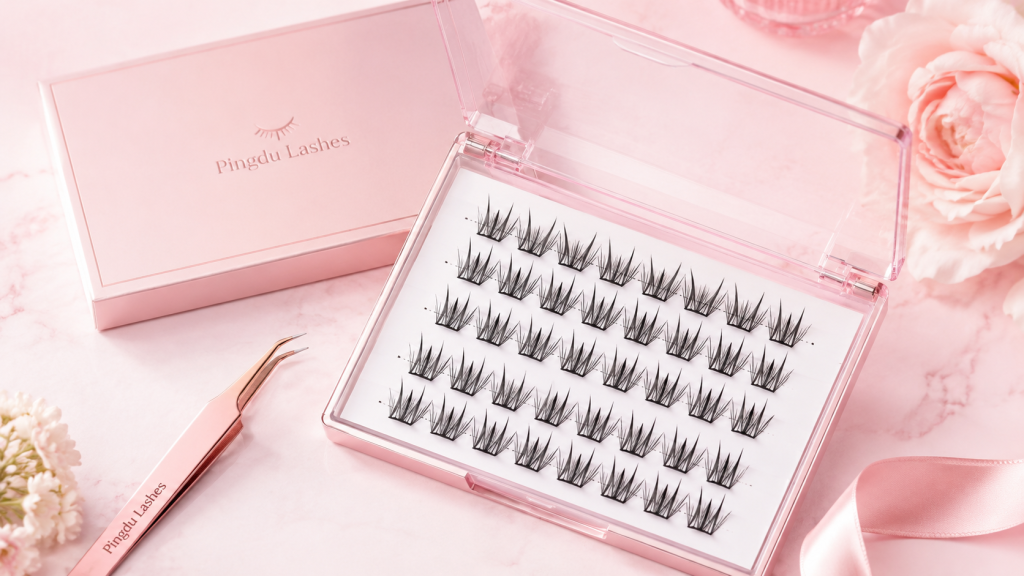
Natural cluster lashes are small groups of lash fibers designed to be applied in separate sections along the lash line.
Because every cluster can be positioned individually, customers can adjust the length, direction and placement according to their eye shape and preferred result.
A natural cluster lash style normally includes:
- Soft and lightweight fibers
- A thin or discreet band
- Natural or light-medium density
- Gradual changes between different lengths
- Flexible placement options
- A softer finish than heavy volume lashes
The purpose of natural cluster lashes is not to cover the natural eye shape. Instead, they add definition while keeping the finished appearance soft and wearable.
Why Choose Natural Cluster Lashes for Everyday Wear?
Everyday lashes need to work in different situations, including work, school, daytime makeup, casual events and beauty content.
An extremely dense or long lash style may look suitable for photoshoots but feel too dramatic for daily use. Natural cluster lashes provide more flexibility because customers can decide how many clusters to apply.
A customer can use fewer short clusters for a subtle result or add several longer sections for more visible definition.
Natural cluster lashes may be suitable for customers who want:
- A soft daily lash look
- More definition than mascara
- Lightweight eye makeup
- A no-makeup makeup appearance
- A flexible alternative to full strip lashes
- Control over lash length and placement
Is 9–13mm a Suitable Length Range?
A mixed 9–13mm tray provides enough variation for natural and slightly more defined lash maps.
The shorter 9mm and 10mm clusters can be placed near the inner corner. The 11mm and 12mm clusters can create a gradual transition, while 13mm clusters can be used selectively for additional definition.
A soft everyday lash map may look like:
9mm – 10mm – 11mm – 12mm – 11mm
This arrangement creates a gradual shape without making the outer corner excessively long.
Customers who prefer a brighter center can use:
9mm – 10mm – 11mm – 12mm – 13mm – 12mm – 11mm
In this arrangement, the longest length is placed closer to the center, creating a soft doll-eye effect.
The final lash map should be adjusted according to the size of the eye, the natural lash line and the customer’s preferred makeup style.
Why C Curl Works for Daily Makeup
C curl creates visible lift while remaining suitable for many everyday makeup styles.
A stronger curl may produce a more dramatic or lifted appearance. C curl provides enough shape to make the lashes noticeable without making the result excessively bold.
C-curl natural cluster lashes can work with:
- Everyday makeup
- Work and office makeup
- School or campus makeup
- Soft glam
- No-makeup makeup
- Casual beauty photography
The final appearance may vary depending on the direction of the natural lashes and where the clusters are placed.
Natural Density vs Heavy Density
Density affects how dark and full the lash line appears.
Natural-density clusters usually contain enough fibers to create visible definition while leaving space between the lash sections. This helps the clusters blend with the wearer’s natural lashes.
Heavy-density clusters create a stronger lash line and may be more suitable for evening makeup, stage makeup or customers who prefer dramatic volume.
For daily-wear collections, natural density is often more versatile because customers can add more clusters when they want a stronger result.
Beauty businesses may consider offering:
- Natural-density clusters for everyday customers
- Medium-density clusters for soft glam
- Dense clusters for dramatic makeup
This gives customers different choices without requiring completely different product categories.
Why a Thin Band Is Important
The band is the base where the lash fibers are connected.
A thick or highly visible band may make individual clusters more noticeable after application. A thin band can help the clusters blend more easily along the lash line.
Thin-band clusters are particularly useful for natural lash styles because the finished result should focus on the lash fibers rather than the base of each cluster.
A lightweight band may also make it easier to:
- Position clusters close together
- Build a gradual lash map
- Combine different lengths
- Create a softer-looking lash line
- Adjust individual sections during application
Natural Cluster Lashes for Different Eye Shapes
Natural cluster lashes can be adapted for several eye shapes by changing the position of the longer clusters.
Round Eyes
Round eyes may benefit from a balanced or slightly elongated lash map.
Shorter clusters can be used around the inner corner, with medium lengths placed through the center and outer section.
Customers wanting a brighter doll-eye effect can place the longest cluster near the center. Customers wanting a softer elongated appearance can move the longest length slightly toward the outer third.
Elongated Eyes
Elongated eyes can use gradual lengths across the lash line without adding excessive outer-corner length.
A balanced arrangement helps maintain the natural eye shape while adding definition and softness.
Visible Double Eyelids
Customers with visible double eyelids can use mixed lengths to create either a subtle daily appearance or a more defined center-focused result.
The number of clusters and the spacing between them can be adjusted according to the amount of visible eyelid space.
Glue-Free or Regular Glue-On Options?
Natural cluster lashes can be supplied in glue-free and regular glue-on formats.
Glue-free clusters may appeal to customers looking for a convenient application method. They can also be suitable for beginner-focused or at-home lash collections.
Regular glue-on clusters may appeal to customers who already have a preferred adhesive and want more control over placement.
Neither format is suitable for every customer. Beauty businesses can test both options before deciding which one best fits their market.
Important points to compare include:
- Ease of application
- Placement flexibility
- Customer experience level
- Tray size
- Packaging format
- Customer feedback
- Repeat purchase preferences
Choosing a Suitable Tray Size
Different tray sizes can serve different retail and wholesale needs.
18-Cluster Trays
An 18-cluster tray can be suitable for samples, trial products or smaller retail packages.
This format allows customers to test the lash style before purchasing a larger quantity.
36-Cluster Trays
A 36-cluster tray provides more clusters while keeping the packaging relatively compact.
It may be suitable for regular retail products or customers who want several complete applications.
60-Cluster Trays
A 60-cluster tray is suitable for larger product formats and more frequent users.
It may also provide lash brands with more space to include different lengths within one tray.
Beauty businesses should consider the target retail price, customer usage habits and packaging design when selecting a tray size.
A Soft Natural Cluster Lash Example
Pingdu Lashes offers natural cluster lashes for brands developing soft everyday and private label lash ranges, including mixed-length options for different lash maps.
The product specifications include:
- Mixed 9–13mm lengths
- C curl
- Black lash color
- Premium synthetic fibers
- Lightweight thin band
- Natural-density finish
- Glue-free and regular glue-on formats
- 18, 36 and 60-cluster tray options
The style is designed to create a soft, youthful and natural appearance without making the lash line overly dense.
It can be included in everyday lash collections, natural lash collections, soft doll-eye collections and no-makeup makeup product ranges.
The available formats also allow lash brands to compare smaller sample trays with larger retail options.
What Should Lash Brands Test Before Ordering?
Before selecting natural cluster lashes for a larger order, beauty businesses should test:
- Whether the fibers look soft and natural after application
- Whether the 9–13mm range suits the target customer
- Whether the band remains discreet along the lash line
- Whether the density is suitable for daily makeup
- Whether customers prefer glue-free or regular glue-on options
- Which tray quantity fits the intended retail price
- Whether the packaging matches the brand style
- Which lash maps receive the best customer feedback
Sample testing can help brands avoid choosing a style based only on product photos.
A product that looks natural in the tray should also be evaluated after application and during normal daily wear.
How Can Beauty Businesses Build a Natural Lash Collection?
A natural lash collection can include several related styles rather than one universal product.
For example, a collection may include:
- Short natural clusters for subtle daily makeup
- Mixed 9–13mm clusters for flexible lash maps
- Soft doll-eye clusters with longer center sections
- Light wispy clusters for textured makeup
- Glue-free options for beginners
- Regular glue-on options for experienced users
- Small sample trays
- Larger retail trays
Offering several closely related styles allows customers to choose according to their eye shape, makeup habits and preferred level of definition.
Beauty businesses can also test mixed-style orders before selecting the strongest products for a permanent collection.
Final Thoughts
Natural cluster lashes for everyday wear should combine soft fibers, gradual lengths, suitable curl, natural density and a lightweight band.
A mixed 9–13mm C-curl style provides enough flexibility for soft daily lash maps, subtle doll-eye effects and more defined makeup looks.
For lash brands and beauty sellers, the most useful approach is to compare several tray formats and application options before placing a larger order. For branding, packaging and OEM coordination, see our private label and custom lash services.
The final product selection should reflect how real customers apply the lashes, which lengths they use most often and whether they prefer natural or more visible definition.