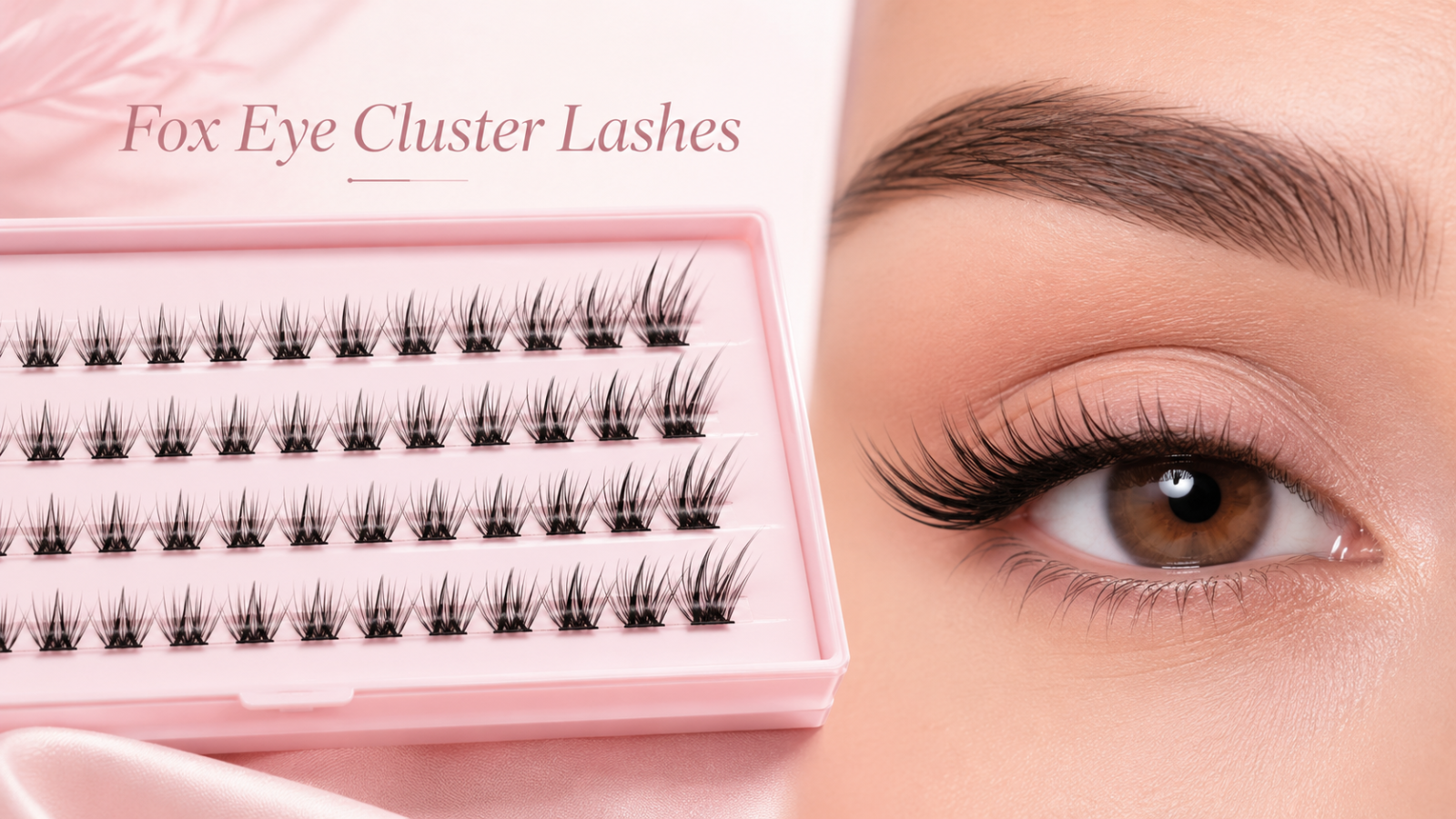
Fox eye cluster lashes are designed to create a lifted and elongated appearance by placing more visual emphasis toward the outer section of the lash line.
Unlike a center-focused doll-eye style, a fox-eye lash map normally uses shorter clusters near the inner corner and gradually longer clusters toward the outer third of the eye.
This guide explains how to choose 9–13mm fox eye cluster lashes, including suitable lash maps, C curl, natural density, thin bands and glue-free or regular glue-on options.
What Are Fox Eye Cluster Lashes?
Fox eye cluster lashes are small lash sections arranged to create a lifted outer-corner effect.
The style normally begins with shorter lengths near the inner corner and gradually increases toward the outer section. This length transition can visually elongate the eyes and create a soft, attractive fox-eye appearance.
A fox eye cluster lash style may include:
- Shorter inner-corner clusters
- Gradually increasing lengths
- More definition toward the outer third
- Separated or wispy lash points
- A lightweight thin band
- Natural or medium density
The final result can range from soft and natural to dramatic, depending on the length differences, number of clusters and density of the lash fibers.
How Do Fox Eye Lashes Create a Lifted Look?
The lifted appearance comes mainly from the position of the longest clusters.
In a doll-eye lash map, the longest length is usually placed near the center. In a fox-eye lash map, the longest clusters are moved closer to the outer third of the lash line.
This creates a gradual upward and outward direction that can make the eyes appear more elongated.
A balanced fox-eye design should avoid placing an excessively heavy cluster at the very end of the outer corner. Too much weight in this area may make the eyes appear lower rather than lifted.
A more controlled design normally uses:
- A gradual transition between lengths
- One or two longer outer-section clusters
- A slightly shorter final cluster
- A lightweight band
- Natural or medium lash density
Is a 9–13mm Length Range Suitable for Fox Eye Lashes?
A mixed 9–13mm tray provides enough variation to create a natural or more defined fox-eye lash map.
The 9mm and 10mm clusters can be used near the inner corner. The 11mm and 12mm sections can create a gradual transition, while the 13mm clusters can add definition toward the outer third.
A soft fox-eye lash map may use:
9mm – 10mm – 11mm – 12mm – 13mm – 12mm
In this arrangement, the length gradually increases toward the outer section, followed by a slightly shorter final cluster.
This helps maintain a lifted appearance without making the outer corner look too heavy.
A softer everyday version may use:
9mm – 10mm – 11mm – 12mm – 12mm – 11mm
Customers who want a more noticeable fox-eye effect can use more visible 12mm and 13mm clusters toward the outer third.
The final lash map should still be adjusted according to the customer’s eye size, natural lash direction and preferred makeup style.
Why C Curl Works for Fox Eye Styles
C curl creates visible lift while remaining suitable for natural, soft-glam and photoshoot makeup.
It provides enough curl to make the lash fibers noticeable without producing an excessively strong or rounded effect.
When C curl is combined with gradually increasing outer lengths, it can create a defined and elegant fox-eye appearance.
C-curl fox eye cluster lashes may be suitable for:
- Soft fox-eye makeup
- Cat-eye-inspired makeup
- Photoshoot makeup
- Defined everyday makeup
- Soft glam
- Beauty videos and social media content
The final effect also depends on how closely the clusters are placed and how the natural lashes grow.
Fox Eye Lashes for Different Eye Shapes
Fox eye cluster lashes can be adapted for different eye shapes by adjusting the position and number of longer clusters.
Elongated Eyes
Elongated eyes can work well with a gradual outer-corner lash map.
The natural shape can be enhanced by using shorter inner sections and slightly longer clusters through the outer third.
To prevent the result from becoming excessively long, the final cluster can be slightly shorter than the section before it.
Round Eyes
Round eyes may use a controlled fox-eye map to create a more elongated appearance.
Instead of placing the longest cluster in the center, the length can gradually increase toward the outer third.
The transition should remain smooth so the lash line does not appear uneven or overly dramatic.
Visible Double Eyelids
Customers with visible double eyelids can use mixed lengths to create either a soft lifted effect or a more defined fox-eye appearance.
The number of clusters and spacing between the sections can be adjusted according to the amount of visible eyelid space.
Customers with larger visible eyelid areas may prefer more separated spikes, while customers wanting a softer result can use closer and more natural-looking clusters.
Natural Density or Dramatic Density?
Density affects how dark, full and dramatic the finished lash line appears.
Natural-density fox eye cluster lashes create visible outer-corner definition while keeping the lash line lightweight.
This option may be suitable for customers who want an elongated appearance without excessive volume.
A denser fox-eye style creates a stronger and more dramatic effect. It may be suitable for photoshoots, evening makeup and customers who prefer a darker lash line.
Lash brands can offer different options:
- Natural-density fox eye clusters for everyday makeup
- Medium-density clusters for soft glam
- Dense fox eye clusters for dramatic makeup
Natural density can be more flexible because customers can add extra clusters when they want a stronger result.
Why a Thin Band Is Important
The band is the base that holds the fibers of each lash cluster together.
A thin band can help the clusters blend more naturally along the lash line. It also prevents the outer corner from appearing excessively heavy.
This is especially important for fox-eye designs because several clusters may be positioned close together through the outer section.
A lightweight thin band can make it easier to:
- Create a smooth transition between lengths
- Position clusters close together
- Adjust the direction of the outer clusters
- Maintain a softer lash line
- Combine natural and defined lash sections
The band should remain discreet so that the lifted shape and lash fibers stay as the main visual focus.
Separated Spikes or Soft Wispy Fibers?
Fox eye cluster lashes can use clearly separated spikes, soft wispy fibers or a combination of both.
Separated spikes create more visible definition and can produce a stronger photogenic effect. They may be suitable for beauty content, photoshoots and dramatic fox-eye collections.
Softer wispy fibers create a more blended appearance and may be easier to include in everyday or natural lash collections.
A balanced design can combine:
- Shorter surrounding fibers
- Several longer defined points
- Gradual outer-corner lengths
- Natural spacing between clusters
Beauty businesses can test several spike patterns to determine which style is most suitable for their customers.
Glue-Free or Regular Glue-On Fox Eye Lashes?
Fox eye cluster lashes can be supplied in glue-free and regular glue-on formats.
Glue-free clusters may appeal to customers looking for a convenient at-home application method. They can also be suitable for beginner-focused lash collections.
Regular glue-on clusters may appeal to experienced customers who already have a preferred lash adhesive and want greater control over placement.
Important factors to compare include:
- Ease of application
- Control over the outer-corner direction
- Customer experience level
- Placement flexibility
- Tray quantity
- Packaging format
- Customer feedback
Offering both options allows a lash brand to serve customers with different application preferences.
Choosing a Suitable Tray Size
Different tray sizes can support samples, trial orders and regular retail products.
18-Cluster Trays
An 18-cluster tray can be used for sample kits, trial products or smaller retail packages.
This format allows customers to test the fox-eye style before purchasing a larger tray.
36-Cluster Trays
A 36-cluster tray provides more clusters while keeping the packaging compact.
It may be suitable for regular retail products and customers who want several applications.
60-Cluster Trays
A 60-cluster tray provides more product for frequent users and larger retail formats.
It also gives brands more space to include several lengths in one tray, making it easier for customers to create different fox-eye lash maps.
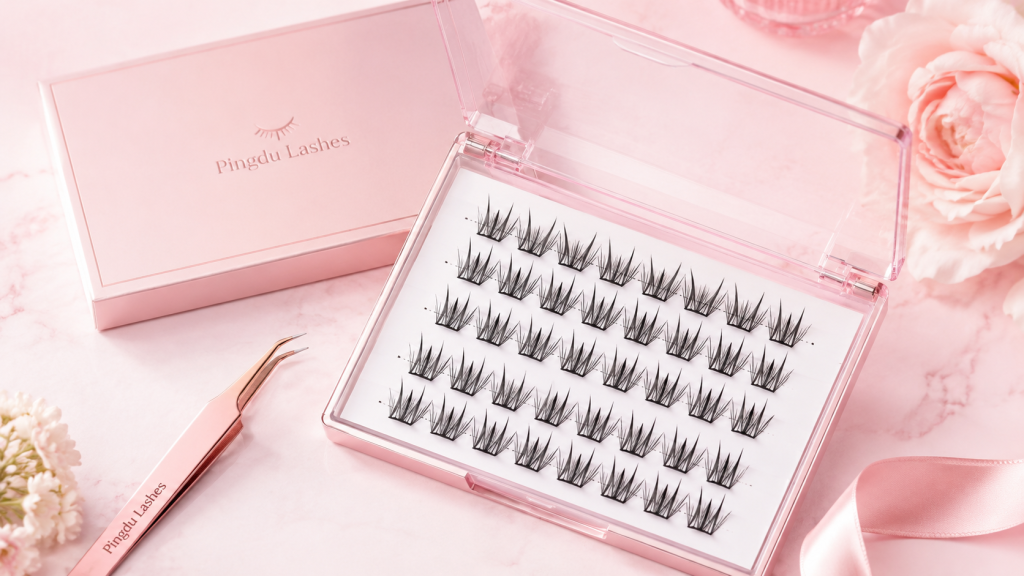
A Nine-Tails Fox Cluster Lash Example
Pingdu Lashes offers a fox eye cluster lash style based on the Nine-Tails Fox cluster lash design.
The product specifications include:
- Mixed 9–13mm lengths
- C curl
- Black lash color
- Premium synthetic fibers
- Lightweight thin band
- Natural-density finish
- Glue-free and regular glue-on formats
- 18, 36 and 60-cluster tray options
The design creates a naturally enlarged eye appearance with more definition toward the outer section of the lash line.
Its lifted shape can be included in fox-eye collections, cat-eye-inspired collections, soft-glam lash ranges and photogenic cluster lash sets.
The natural density also allows customers to adjust the finished effect by changing the number and position of the clusters.
What Should Lash Brands Test Before Ordering?
Before selecting fox eye cluster lashes for a larger order, beauty businesses should test:
- Whether the outer-corner effect looks lifted after application
- Whether the 9–13mm range suits the target customer
- Whether the transition between lengths appears smooth
- Whether the final outer cluster feels too heavy
- Whether the thin band remains discreet
- Whether customers prefer natural or dramatic density
- Whether glue-free or regular glue-on options perform better
- Which tray size fits the intended retail market
Testing several samples can help brands identify the most suitable spike pattern, length arrangement and application format.
A product should be evaluated both inside the tray and after application, because the final eye shape depends on placement and the customer’s natural lashes.
How Can Beauty Businesses Build a Fox Eye Lash Collection?
A fox eye lash collection can include several styles for different customer preferences.
For example, a collection may include:
- Short natural fox eye clusters for everyday makeup
- Mixed 9–13mm clusters for flexible lash maps
- Wispy fox eye clusters for soft glam
- Defined spiky clusters for photoshoots
- Glue-free options for beginners
- Regular glue-on options for experienced users
- Small sample trays
- Larger retail trays
Mixed-style sample orders can help beauty businesses compare several products before selecting the strongest styles for a permanent collection.
The final collection should reflect the eye shapes, makeup preferences and application experience of the target customers.
Final Thoughts
Fox eye cluster lashes create a lifted and elongated appearance by gradually increasing the lash lengths toward the outer third of the eye.
A mixed 9–13mm C-curl design provides enough variation for soft, natural and more defined fox-eye lash maps.
The most important factors are the position of the longest clusters, the weight of the outer section, the density of the fibers and the thickness of the band.
For lash brands and beauty businesses, testing different tray sizes, spike patterns and application formats can help identify the most suitable products for their customers. Brands developing custom packaging or a broader collection can also review our private label and custom lash services.