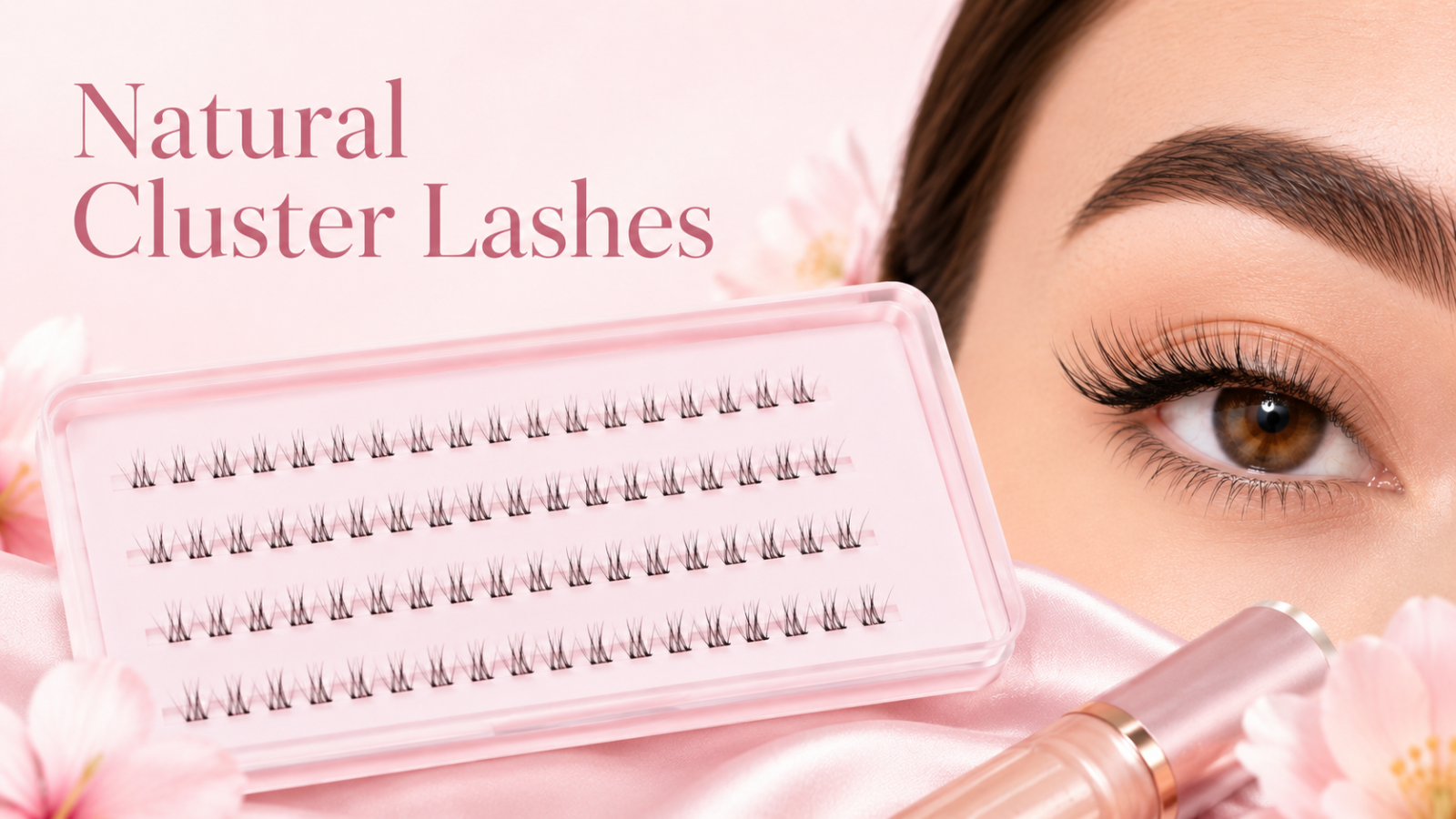
Natural cluster lashes can look like an easy product choice, but buyers often run into the same problem: several styles appear similar in photos while serving very different customer groups. The Little Daisy style is a good example. Its shorter 9–12mm range, C curl and soft-density appearance make it suitable for some collections, but not every market needs another natural-looking cluster lash.
This guide focuses on when Little Daisy makes sense as a product choice, how to position it inside a lash range, and what buyers should check before placing a larger order.
Who Is Little Daisy Best Suited For?
Little Daisy is most suitable for customers who prefer a clean, soft and wearable lash effect rather than a dramatic or highly structured look.
It can work particularly well for:
- Beginners who are new to DIY cluster lashes
- Customers who prefer shorter everyday lengths
- Office, clean-makeup and natural-look collections
- Retailers that need an easy entry-level cluster style
- Brands building a balanced range with both natural and stronger styles
If your target customers mainly buy long fox-eye, anime, spiky or high-volume styles, Little Daisy may be too soft to act as a hero product. In that case, it may work better as a supporting natural option.
Why the 9–12mm Range Matters
The 9–12mm mixed length range is one of the main reasons this style feels more natural. Shorter lengths usually make it easier to create a controlled lash map without pushing the finished look too far into dramatic territory.
For wholesale buyers, this matters because a product can photograph well but still miss the real customer preference if the length range is too long for daily wear.
Before ordering, compare the sample against the styles already selling in your market. If your existing natural collection is mostly 10–16mm, Little Daisy can fill a shorter, softer position rather than directly competing with those products.
Pre-Glued or Glue-On: Which Format Fits Your Customers?
Little Daisy can be offered in different formats, including pre-glued and regular glue-on versions. The best choice depends on the buyer profile rather than the lash style alone.
- Pre-glued formats are easier to position for beginners, convenience-focused buyers and quick-application collections.
- Glue-on formats are more suitable for customers who already use lash adhesive and want more control over placement.
If you are testing a new market, it can be useful to compare both formats in samples before committing to one packaging direction.
Where Little Daisy Fits in a Cluster Lash Collection
A common mistake is adding too many natural styles that look almost identical on the shelf. A better approach is to give each style a clear role.
Little Daisy can sit alongside:
- Wispy styles for more texture
- Fox-eye styles for stronger outer-corner shaping
- Spiky or anime styles for more visible definition
- Volume styles for customers who want fuller results
This makes the natural style easier to understand and reduces overlap between products.
You can review the actual Little Daisy Natural Cluster Lashes product page for available product formats and current wholesale details.
What Buyers Should Check in Samples
Do not approve this style from the name or product photo alone. Sample evaluation should focus on whether the physical product really matches the intended natural positioning.
- Actual length progression across the tray
- Curl consistency between clusters
- Band thickness and visibility
- Density and softness of the finished look
- Left-right consistency between trays
- Ease of removal and placement for the selected format
- Tray and packaging fit
For brands developing private label packaging, the product format should be confirmed before artwork and tray dimensions are finalized. You can also review our private label and custom lash service when planning packaging or mixed-style collections.
When Little Daisy May Not Be the Best Choice
This style is not automatically suitable just because natural lashes are widely sold. It may be a weaker choice if your customer base mainly prefers very long lengths, heavy density, strong cat-eye shaping or highly visible lash maps.
In those markets, a softer style can still be useful, but it should have a clear purpose such as beginner use, everyday wear or a lower-intensity option inside a broader collection.
How to Test the Style Before a Bulk Order
For a new collection, a simple test is usually more useful than ordering many similar natural styles at once.
- Choose one Little Daisy sample format.
- Compare it with one existing natural or wispy style.
- Check customer feedback on length, softness and application.
- Confirm the final tray and packaging direction.
- Only then decide whether the style deserves a larger wholesale position.
Browse our cluster lash collection if you want to compare Little Daisy with other natural, wispy, fox-eye, spiky and volume options.



