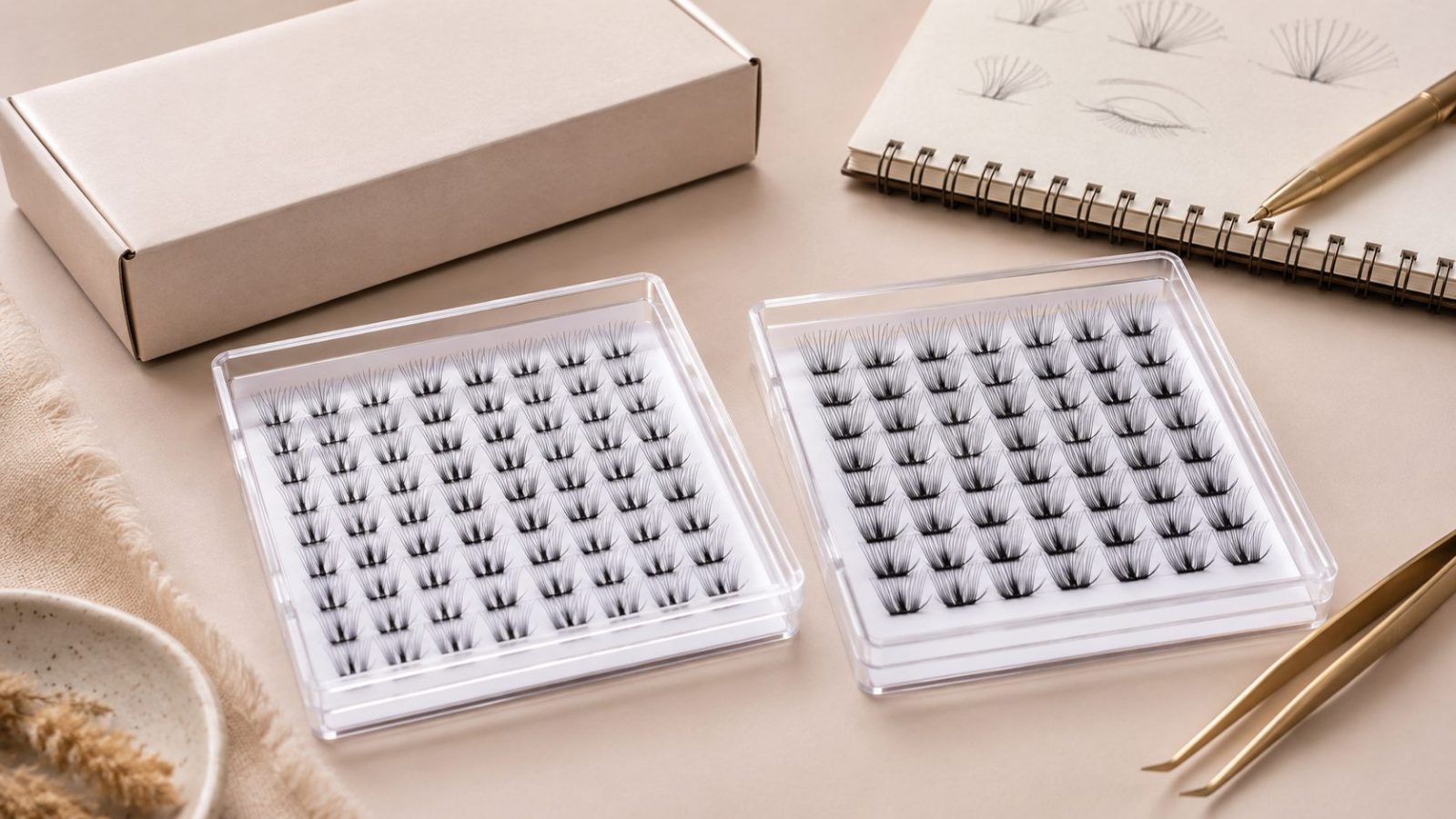
A cluster lash sample can look perfect when it arrives. The style matches the reference photo, the tray looks organized, and the product seems ready for launch.
Then the bulk order arrives.
The lashes may still be acceptable, but something feels different. The curl may look slightly different, the length distribution may not create the same effect, the clusters may appear less consistent, or the overall tray may no longer look exactly like the approved sample.
For beauty brands, wholesalers and private label businesses, this is one of the most frustrating sourcing problems because the buyer often believes the product was already confirmed.
For companies working with pingdu lashes sourcing channels, understanding why sample-to-bulk differences can happen is an important part of building a more reliable purchasing process.
Why Can a Good Sample Still Lead to a Different Bulk Order?
A sample is usually a very small representation of a much larger production order.
When a buyer receives several trays for evaluation, it may be easy to assume that every detail of the product has now been fully defined.
In reality, some important details may still exist only in conversations, reference photos or general product names rather than in a clearly documented product specification.
As production volume increases, unclear details can become more visible.
This does not automatically mean that a supplier intentionally changed the product. In many cases, the problem begins with an approval process that was not specific enough.
1. A Small Sample Does Not Show the Full Range of Production Variation
A buyer may approve only a few sample trays before placing a much larger order.
Those samples can show whether the general product direction is suitable, but a small sample cannot always reveal how consistent a larger production quantity will appear.
With cluster lashes, buyers may notice differences in areas such as:
- Cluster shape
- Curl appearance
- Length distribution
- Defined spikes or wispy sections
- Tray arrangement
- Overall visual balance
The larger the order, the more important it becomes to define which characteristics are critical to the approved style.
2. The Product Name May Be Clear, but the Specification Is Not
Terms such as “wispy,” “spiky,” “natural,” “volume” or “manga” describe a styling direction, but they are not complete production specifications.
Two products can both be called “wispy cluster lashes” while creating noticeably different final effects.
The same problem can happen with:
- Cat eye styles
- Mixed length products
- Volume cluster lashes
- Pre-glued cluster lashes
- Glue-on DIY cluster lashes
If a buyer approves a sample but does not record the actual product reference clearly, a later production discussion may depend too heavily on a general style name.
This is one reason physical samples, reference photos and confirmed product codes are valuable for bulk and repeat orders.
3. Length Distribution Can Change the Entire Lash Effect
Cluster lashes are highly visual products, and small changes in length arrangement can influence the finished appearance.
A buyer may remember the sample as “cat eye” or “manga,” but the actual effect may depend on how different lengths are distributed across the tray.
If the approved length pattern is not recorded clearly, the bulk order may still contain the correct general product category while producing a different visual result.
For style-driven products, buyers should confirm the physical arrangement rather than relying only on a written style description.
4. Curl Differences Can Be More Noticeable in Bulk
Curl is another detail that can affect how a cluster lash collection looks when multiple trays are viewed together.
During sample evaluation, a buyer may focus mainly on whether the overall style looks attractive.
When a larger shipment arrives, differences in curl appearance may become easier to notice because many products are being compared at the same time.
This is why curl direction should be part of the approved product reference whenever it is important to the final style.
5. Wispy, Spiky and Manga Styles Are Especially Sensitive to Structure
Some cluster lash styles depend heavily on the placement of defined sections.
Wispy products may depend on layered height changes.
Spiky products may depend on the position and frequency of more defined peaks.
Manga-inspired products may depend on stronger length contrast and a recognizable visual rhythm.
Small changes in these details can make the finished product feel different even when the general product category remains the same.
For buyers comparing china lashes sourcing options, clear reference images can be especially useful for style-driven products.
6. Pre-Glued Cluster Lashes Need More Than Visual Approval
For pre-glued cluster lashes, appearance is only one part of the sample evaluation.
A tray may look visually correct while the application experience still requires separate testing.
Buyers should evaluate the selected product according to its intended use and confirm whether the complete experience matches the target market.
Important points may include:
- How the product is handled during application
- Whether the pre-glued format matches the intended customer experience
- Whether the lash style remains suitable after application
- Whether the product and packaging work together as expected
The exact adhesive performance and application method depend on the selected product, so they should be confirmed through actual sample testing rather than assumed from appearance alone.
7. Packaging Changes Can Make the Product Feel Different
Sometimes the lash product itself is not the only reason a bulk order feels different.
A change in tray layout, packaging presentation, product labeling or style identification can change the overall retail experience.
For private label brands, the lash tray and packaging should be approved together when possible.
This is particularly important when a brand has multiple similar SKUs and relies on packaging to help customers distinguish between styles.
Learn more about our private label and custom lash services.
8. “Same as the Sample” Is Not Always a Complete Production Instruction
Buyers often use the phrase “same as the approved sample.”
This is useful, but it becomes much stronger when the sample is supported by clear records.
A more complete reference may include:
- Approved physical sample
- Product reference code
- Style photos
- Length configuration
- Curl direction
- Tray arrangement
- Packaging version
- Confirmed customization details
Without these references, both buyer and supplier may believe they understand “the same product” while focusing on different details.
9. Switching Suppliers Can Make the Difference Even More Obvious
Beauty brands sometimes change suppliers because of price, communication, lead-time concerns or dissatisfaction with previous orders.
When this happens, the new supplier may receive only photos of the previous product.
However, a photo does not always show every detail that created the original lash effect.
For example, it may be difficult to judge:
- Exact curl appearance
- Cluster base structure
- Length distribution
- Density direction
- Application experience
- Packaging dimensions
If a brand wants to reproduce an existing product direction with a new supplier, physical samples and clear specifications can make product matching more accurate.
10. The Lowest Price Can Become Expensive if the Product Must Be Reworked
A small difference in unit price may look important when comparing quotations.
However, a lower quotation can lose its advantage if the final product requires additional sample rounds, packaging changes, customer service work or replacement discussions.
This does not mean that the most expensive supplier is automatically the best choice.
It means buyers should evaluate the complete sourcing result rather than focusing only on the initial unit price.
Product matching, sample approval, communication and repeat-order consistency can all influence the real cost of a wholesale project.
How Beauty Brands Can Reduce Sample-to-Bulk Differences
The goal is not to expect every individual lash to be physically identical.
The goal is to define the characteristics that matter most to the approved commercial product and make those references clear before larger production begins.
A practical process may include:
- Select the preferred product direction.
- Test physical samples.
- Approve the final product reference.
- Keep the approved physical sample.
- Save clear product and tray photos.
- Record confirmed style details.
- Confirm the packaging version.
- Reconfirm important details before bulk production.
This approach creates a clearer shared reference between buyer and supplier.
Do Not Ignore Small Differences During Sample Approval
Buyers sometimes accept a sample even when one or two details are not exactly what they want because they assume those details can be adjusted automatically during bulk production.
This can create problems later.
If a feature matters to the brand, it should be discussed and confirmed before the final approval whenever possible.
It is better to clarify an important styling detail during sample development than to discover after production that both sides interpreted the requirement differently.
Keep the Approved Sample for Repeat Orders
The value of an approved sample does not end after the first bulk order.
For long-term purchasing, the approved sample can remain a useful reference for future production and supplier communication.
This becomes even more important when a brand manages multiple cluster lash styles such as natural, wispy, spiky, volume, cat eye or manga products.
Explore more options through our wholesale eyelash product collection.
When Should a Brand Consider Re-Evaluating Its Cluster Lash Supplier?
Occasional small product variation does not automatically mean a supplier relationship should end.
However, repeated problems may justify a deeper review of the sourcing process.
Brands may want to re-evaluate the situation when:
- The approved product direction cannot be communicated clearly
- Important specifications repeatedly change without confirmation
- Sample and bulk expectations remain difficult to align
- Packaging versions are difficult to manage
- Repeat-order references are not being maintained clearly
- Communication problems continue to create purchasing mistakes
In these situations, comparing alternative product options or suppliers may help the brand determine whether the problem is related to the product, the approval process or the supplier relationship itself.
A Good Bulk Order Starts With a Better Approval Process
When cluster lash samples look good but bulk orders feel different, the cause is not always one single production problem.
The difference may come from incomplete specifications, unclear style references, small-sample limitations, packaging changes or communication gaps during the transition from sample approval to larger production.
For businesses working with a pingdu eyelash supply network, improving the approval process can make supplier comparison and long-term purchasing easier.
Pingdu Lashes works with specialized manufacturing partners to support cluster lash sourcing, sample coordination, private label projects, product matching and packaging discussions.
If your current bulk cluster lash orders no longer match the product direction you originally approved, you can share your existing product photos, physical reference details, target style and packaging requirements with us to explore alternative sourcing options.



