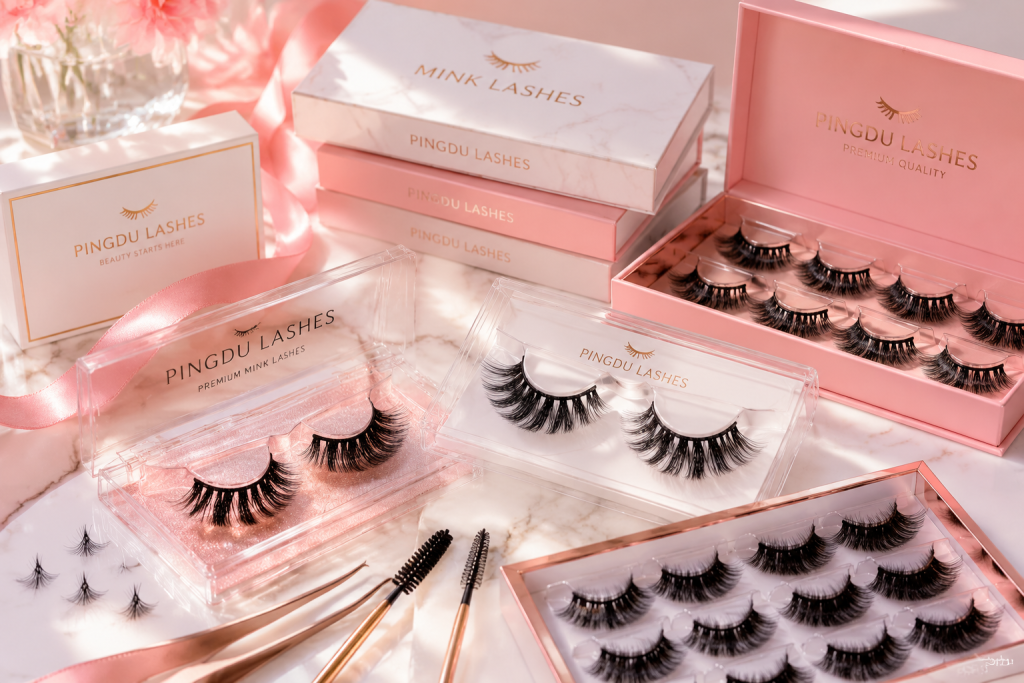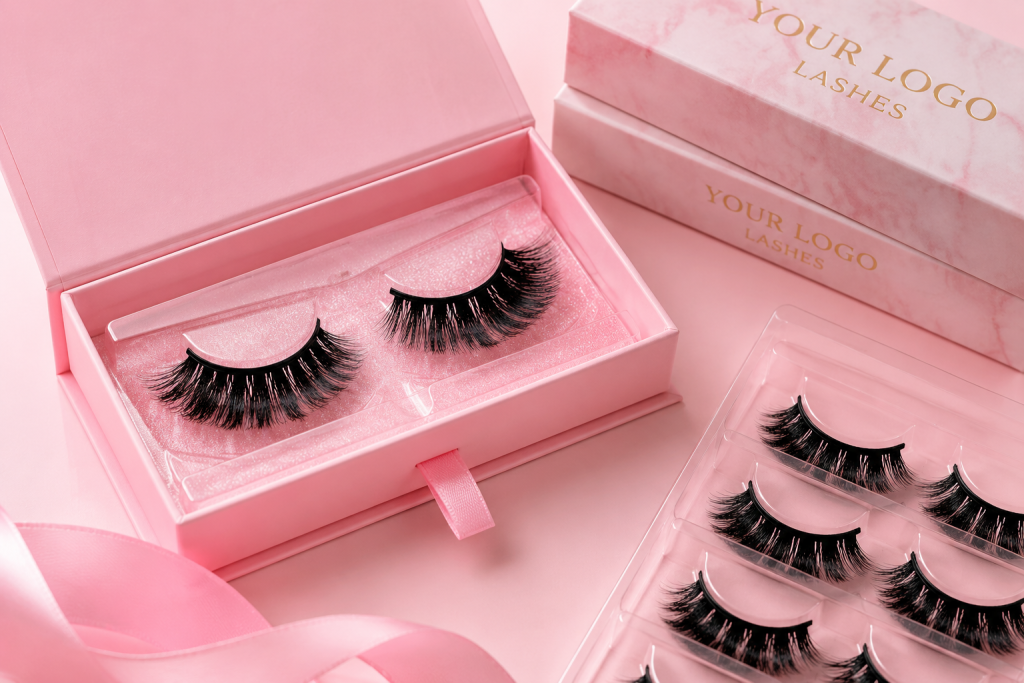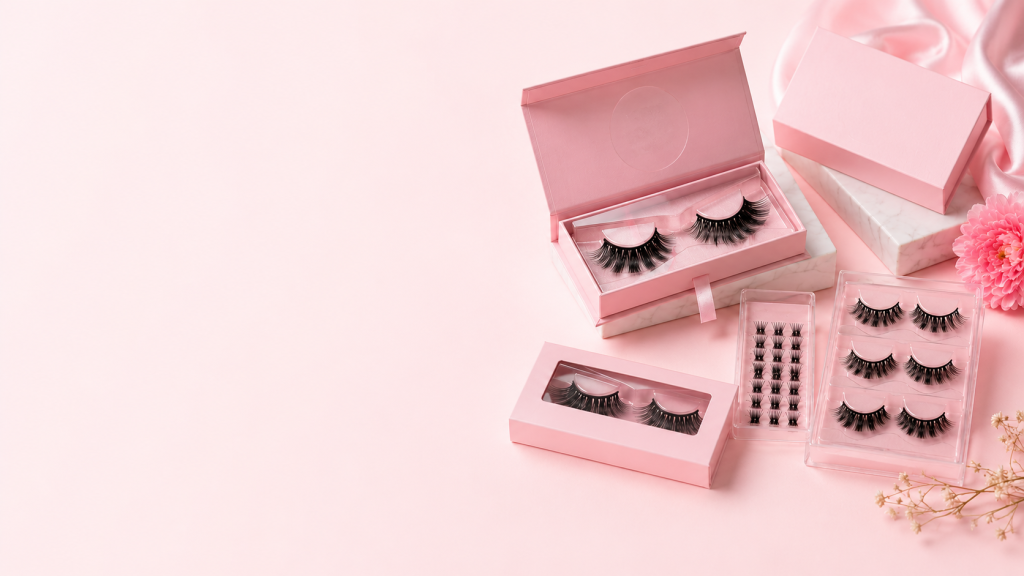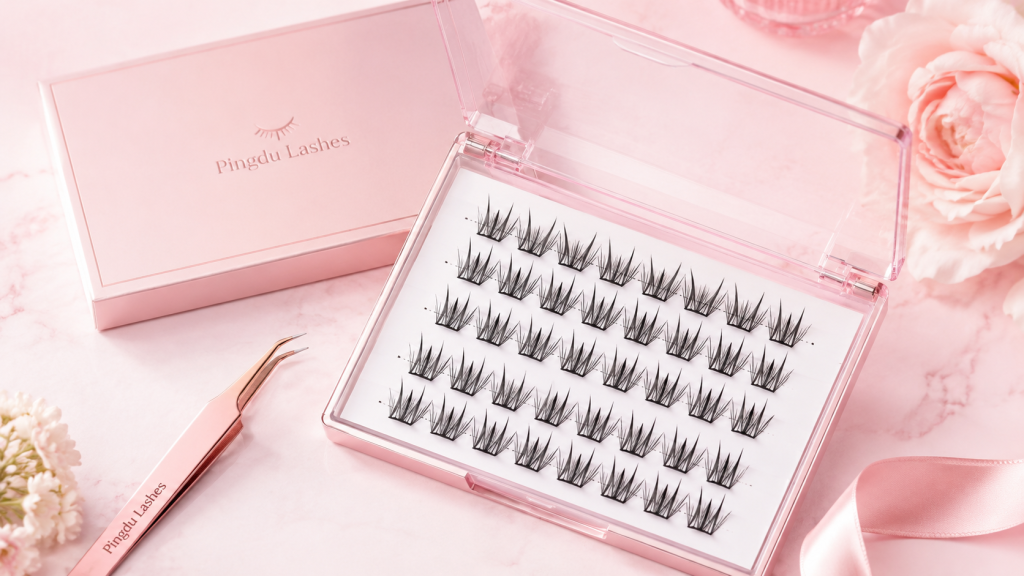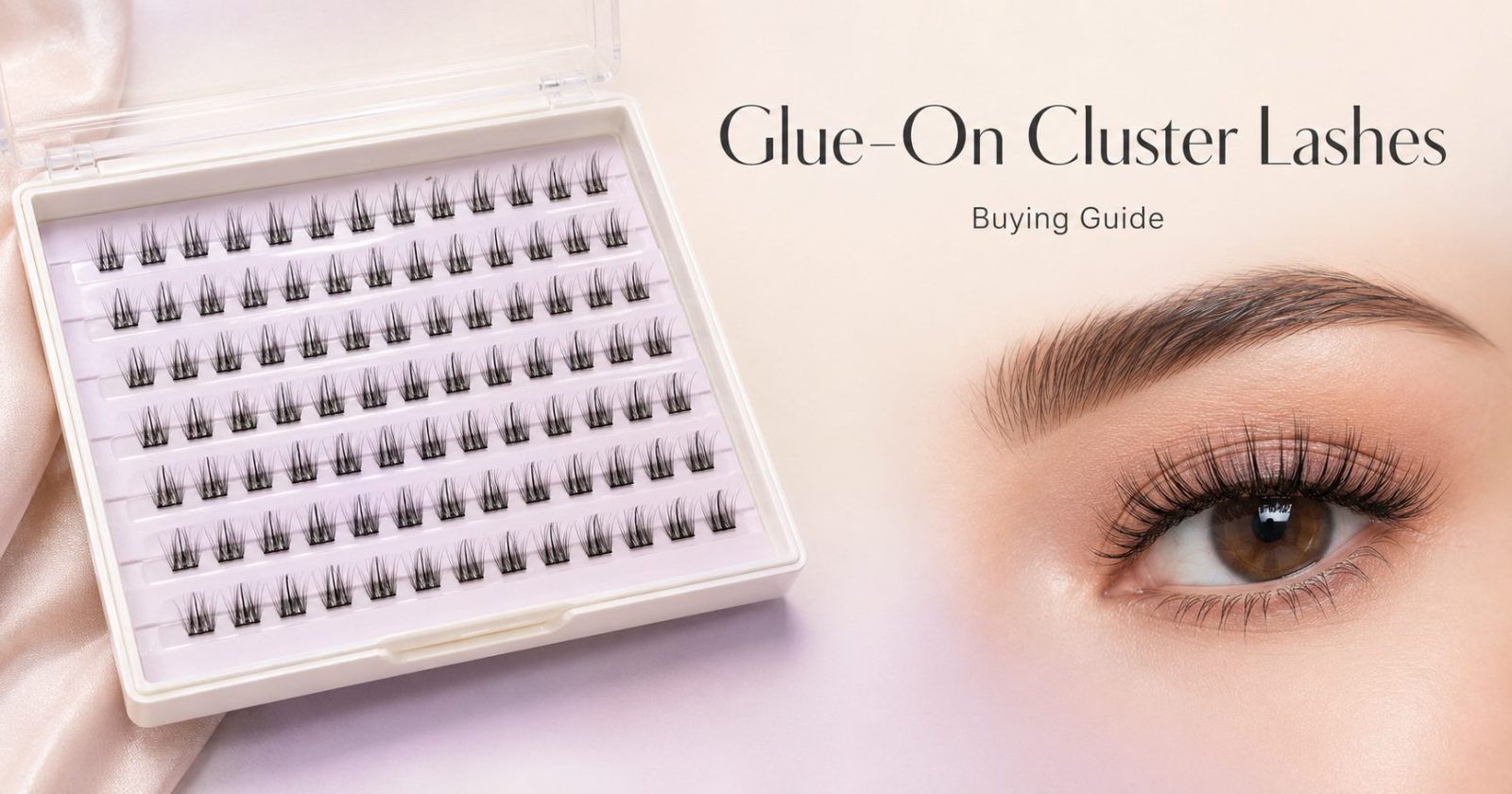
Glue-on cluster lashes give lash brands a flexible product format for customers who prefer to create their own lash maps with a separate compatible adhesive system. They can be arranged to produce Natural, Wispy, Spiky, Anime, Wet Look, Fox Eye, Doll Eye, and other effects, depending on the available cluster style and length combination.
For wholesale and private label buyers, choosing glue-on cluster lashes involves more than selecting an attractive lash pattern. The product format, style direction, tray organization, packaging, target customer, and customization requirements should all support a clear market position.
This guide explains how lash brands and beauty businesses can evaluate 10-row glue-on cluster lashes and prepare a more practical wholesale or private label order.
What Are Glue-On Cluster Lashes?
Glue-on cluster lashes are individual lash clusters intended to be applied with a separate compatible adhesive product. Instead of using a complete strip lash, customers can place the clusters in different positions to create their preferred lash map.
This format gives customers more control over the final look. The same general product category can support natural everyday styles, textured wispy effects, outer-corner emphasis, center-focused doll-eye maps, or more visible spiky arrangements.
The exact result depends on the available cluster design, selected length combination, placement, and the customer’s eye shape. Brands should therefore describe the intended style clearly instead of presenting every cluster lash tray as an identical product.
Glue-On Versus Pre-Glued Cluster Lashes
Glue-on and pre-glued cluster lashes serve different customer preferences. Glue-on clusters are used with a separate compatible adhesive system, while pre-glued clusters include an adhesive element as part of the supplied product format.
Some customers prefer glue-on clusters because they are already familiar with their chosen application products. Others may prefer pre-glued options because they want a more direct product format.
Wholesale buyers should decide whether their audience needs one format or both. The choice can influence the packaging message, application instructions, product photography, and related products offered by the brand.
Businesses comparing the two directions can read the Pre-Glued Cluster Lashes Guide.
Why Consider a 10-Row Format?
A 10-row glue-on format provides a structured way to organize multiple rows of cluster lashes in one tray. Depending on the selected product, the rows may follow one consistent style or support a planned combination.
For B2B buyers, the tray should be evaluated as a complete product rather than only by the number of rows. The selected clusters, internal arrangement, visible presentation, and packaging should work together.
A larger tray format may be positioned as a practical DIY product, a multi-look selection, or a focused lash mapping set. The correct direction depends on the brand’s customer group and the role of the product within its existing collection.
Selecting the Style Direction
The first product decision should be the main lash style. Available directions may include Natural, Wispy, Wet Look, Anime, Spiky, Fox Eye, Doll Eye, or Russian-inspired cluster lashes.
A Natural or soft Wispy direction may suit brands targeting everyday customers. A Wet Look, Anime, or Spiky selection can create a more distinctive visual identity. Fox Eye and Doll Eye products can be organized around different placement effects.
Brands should avoid combining too many unrelated styles without a clear product concept. A focused selection is generally easier to name, photograph, explain, and promote.
Buyers can review the available lash products before deciding which direction fits their collection.
Planning Lengths and Lash Maps
Length combinations should support the intended eye effect. A gradual outward progression may be used for a fox eye direction, while a center-focused arrangement may support a doll-eye look. Natural and textured maps may require different combinations.
Buyers should first decide which finished looks they want customers to create. This makes it easier to discuss the internal tray arrangement and determine whether one combination or several related combinations are appropriate.
Clear tray organization is also important. Customers should be able to understand the available sections without needing to guess how the product was planned.
The Lash Mapping Guide provides additional information about planning different lash effects.
Matching the Product to the Customer
A product should be selected according to the brand’s actual customers rather than only according to a current visual trend. Before ordering, buyers should consider whether their audience prefers natural, textured, dramatic, or fashion-focused lash styles.
Online sellers may need a product direction that is immediately clear in photographs. Lash businesses serving experienced DIY customers may focus more on mapping flexibility. Wholesalers and distributors may prefer styles that fit several customer groups while remaining easy to explain.
Brands can also review the guide to choosing false eyelashes for customers when planning a wider product collection.
Private Label Packaging
Private label packaging should communicate the product type and style direction clearly. Depending on the available project options, buyers may discuss elements such as:
- Brand logo
- Packaging color
- Product naming
- Tray presentation
- Length combination
- Printed branding
- Overall collection design
The packaging should not promise product characteristics that have not been confirmed. Application wording and other printed information should match the selected product format.
Businesses preparing a branded collection can review the Private Label Lash Packaging guide and the available custom lash services.
MOQ and Customization Scope
Custom orders normally start from one carton per style, with 200 boxes per carton. However, this is not a permanent minimum order quantity for every glue-on cluster lash or packaging project.
The actual MOQ may be higher when the order involves special packaging, special materials, special cards, a new mold, a new internal structure, or complete product development.
Starting with an existing 10-row product format and available lash style is often the more practical direction for a brand testing a new collection. After receiving sales and customer feedback, the buyer can discuss deeper customization for future orders.
Evaluating Samples Before Ordering
Samples allow buyers to examine the actual product before confirming a larger order. The evaluation should cover the complete customer experience rather than focusing only on the appearance of one cluster.
Buyers can review:
- The overall lash style and texture
- The consistency of the selected product
- The organization of the tray
- The visibility of different sections
- The suitability of the packaging direction
- How clearly the intended lash map can be presented
Any technical or packaging requirements should be confirmed with the supplier instead of being assumed from a reference image.
Information to Prepare for a Quote
Clear inquiry information helps the supplier evaluate a wholesale or private label project more accurately. Buyers should prepare:
- The preferred lash style
- The required glue-on product format
- The desired length or lash mapping direction
- The estimated order quantity
- The packaging idea or reference
- The logo and available brand artwork
- The target market and customer type
If every detail has not yet been decided, the buyer can begin with the preferred style, estimated quantity, and packaging direction.
Source Glue-On Cluster Lashes
A successful glue-on cluster lash product begins with a clear customer need and a realistic product direction. Buyers should select an available style, plan the tray around the intended lash maps, and use packaging that explains the product clearly.
Starting with an existing 10-row glue-on format can help lash brands test demand before moving into deeper development. Suitable logo, packaging, color, tray, product naming, and branding options can then be discussed according to the actual project.
To discuss wholesale 10-row glue-on cluster lashes or private label packaging, contact Pingdu Lashes with your preferred style, estimated quantity, and customization requirements.