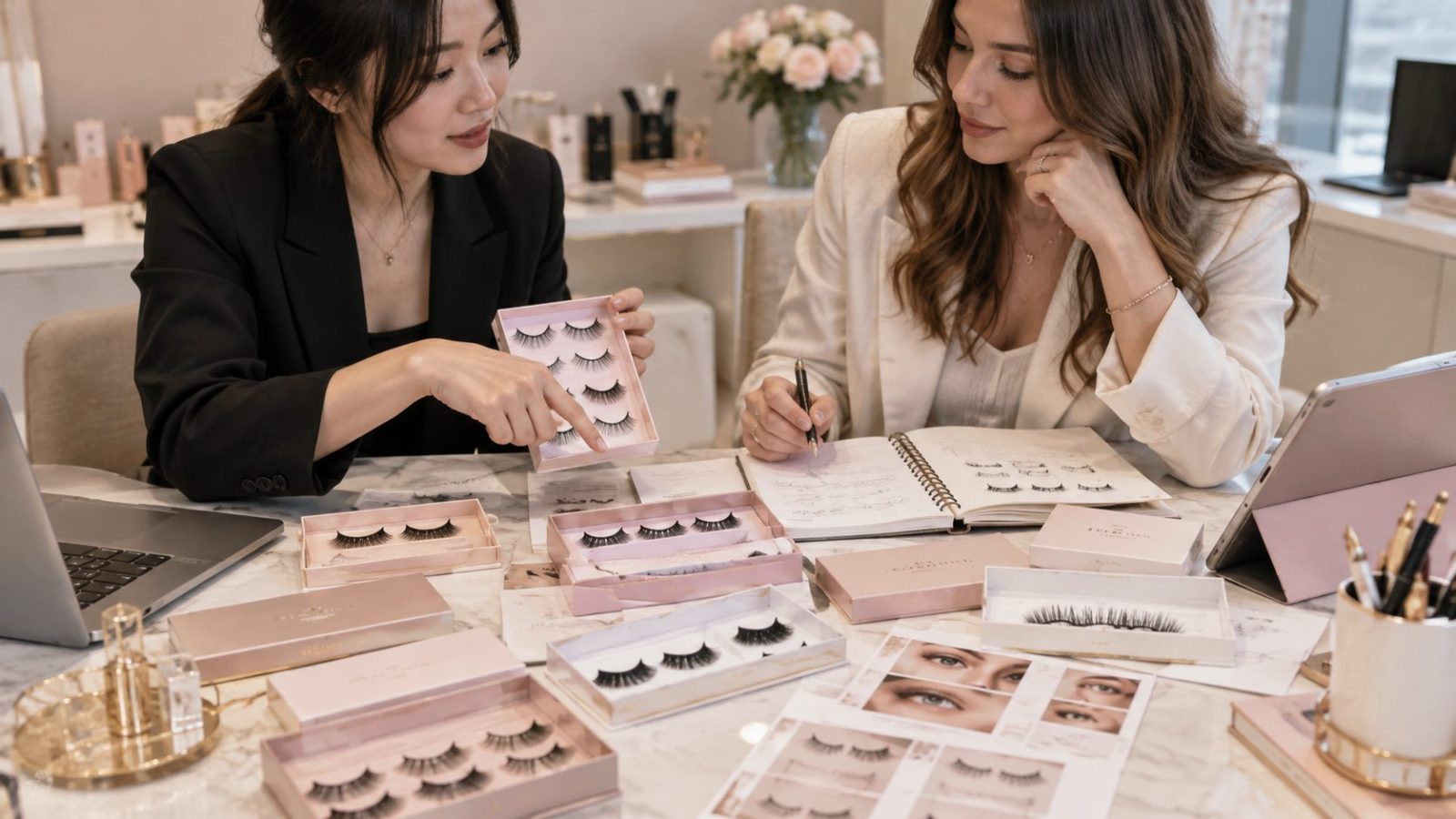
Launching a private label lash collection involves more than choosing a few popular styles and adding your logo to the packaging. For beauty brands, the real challenge is developing a product range that fits the target customer, reflects the brand positioning, and can be produced consistently over time.
Working with an experienced lash manufacturer in China can help brands move from an initial product idea to samples, packaging, production, and repeat orders more efficiently.
Quick Answer: How Does a Private Label Lash Collection Get Developed?
A typical private label lash development process includes defining the target market, selecting the product category, choosing initial styles, testing samples, adjusting specifications, confirming packaging, placing a first production order, and monitoring repeat-order consistency.
The manufacturer should support the brand throughout this process rather than simply providing a product catalog.
1. Start with Your Target Customer
Before selecting lash styles, brands should first define who the products are designed for.
Important questions include:
- Is the target customer looking for natural or dramatic lashes?
- Is the product intended for daily wear, special occasions, salons, or DIY use?
- Which markets will the brand sell in?
- What price level does the brand want to target?
- Will the products be sold through Shopify, Amazon, TikTok Shop, salons, distributors, or physical retail?
The answers influence product style, packaging, material selection, and even the number of styles needed in the first collection.
2. Choose the Right Lash Category
Beauty brands do not need to launch every lash category at the beginning. A focused product range is usually easier to test and manage. Buyers can compare available options in our wholesale lash product range.
Common options include:
- Strip lashes
- DIY cluster lashes
- Professional lash extensions
- Pre-glued or press-on lash products
- Magnetic lashes
For a new brand, it is often better to build a clear collection around one or two categories rather than launching too many unrelated products at once.
3. Select the First Lash Styles Carefully
The first collection should contain enough variety to serve different customer preferences without creating unnecessary inventory pressure.
For example, a strip lash collection may include:
- A lightweight natural style
- A soft wispy style
- A cat-eye style
- A fuller evening style
- A more dramatic statement style
A DIY cluster lash collection may instead focus on several lengths, densities, and lash maps that customers can combine.
An experienced manufacturer can help match existing styles, recommend available designs, or develop new styles based on the brand’s reference images and target market.
4. Request Samples Before Finalizing the Collection
Samples are one of the most important stages in private label lash development.
Brands should evaluate more than appearance. Sample testing can include:
- Overall lash shape
- Fiber softness
- Band comfort
- Symmetry between left and right lashes
- Curl and length consistency
- Density and layering
- Ease of application
- Product appearance inside the packaging
For professional lash extensions, the brand may also need to check curl stability, fiber thickness, fan-making performance, and tray consistency.
5. Adjust the Product Specifications
The first sample is not always the final product.
Brands may want to adjust details such as:
- Lash length
- Curl
- Density
- Fiber arrangement
- Band type
- Color
- Tray configuration
- Mixed-length combinations
This development stage allows the manufacturer and brand to refine the product before moving into larger-scale production.
6. Develop the Private Label Packaging
Packaging is an important part of how customers perceive a lash brand.
Depending on the project, private label packaging may include:
- Custom logo printing
- Custom lash boxes
- Custom trays
- Insert cards
- Barcodes
- Ingredient or product information
- Outer shipping cartons
Brands should consider both appearance and practicality. Packaging needs to protect the product, communicate the brand identity, and work efficiently for shipping and retail.
7. Confirm MOQ, Pricing and Production Requirements
Before confirming the first order, the brand and manufacturer should clearly understand the commercial requirements.
These normally include:
- Minimum order quantity
- Product unit price
- Packaging quantity
- Sample cost
- Packaging setup cost
- Production lead time
- Payment terms
- Shipping method
For a new brand, production flexibility can be especially important. A smaller first order may allow the company to test styles before committing to larger volumes.
8. Place a First Trial Production Order
The first production order should be treated as both a commercial launch and a supply-chain test.
It allows the brand to evaluate:
- Production consistency
- Packaging quality
- Lead time
- Communication
- Final product appearance
- Customer response
After receiving market feedback, the brand can identify which styles should be reordered, adjusted, expanded, or removed.
9. Build the Collection Around Real Sales Data
A successful lash collection does not need to remain fixed.
After the first launch, brands can use sales data and customer feedback to improve the range.
For example, the next development stage may include:
- Adding new best-selling lash styles
- Introducing different lengths or densities
- Developing seasonal collections
- Adding complementary lash products
- Upgrading packaging
- Creating products for a new market segment
This approach allows the collection to grow based on actual customer demand rather than assumptions.
10. Pay Attention to Repeat-Order Consistency
Private label development does not end when the first order ships.
For a growing beauty brand, repeat-order consistency is one of the most important factors in choosing a long-term manufacturer.
A reliable supplier should be able to maintain stable product specifications, packaging quality, materials, and production standards across different production batches.
This becomes increasingly important as order quantities grow and the brand expands into new sales channels. Established buyers can also review our guide on evaluating lash manufacturers for long-term OEM supply.
Why Work with Pingdu Lashes for Private Label Development?
Pingdu Lashes supports beauty brands with private label and OEM lash development, including product selection, sample matching, custom lash styles, packaging customization, production, and repeat-order supply.
We work with different lash categories, including strip lashes, DIY cluster lashes, professional lash extensions, magnetic lashes, and customized lash products.
For new brands, we can help organize the first product collection around the target market and brand positioning. For established beauty companies, we can support new lash-line development and longer-term manufacturing requirements.
Frequently Asked Questions
How many lash styles should a new brand launch first?
There is no single ideal number. Many brands start with a focused collection of several clearly different styles and expand after seeing which products receive the strongest customer response.
Can a manufacturer develop lashes from reference images?
Yes. Reference images, existing products, packaging examples, and target-market information can help a manufacturer understand the desired style and recommend suitable samples or development options.
Do I need custom packaging for the first order?
Not always. Some brands test products first and introduce fully customized packaging after confirming the best-selling styles. Other brands prefer to launch with complete private label packaging from the beginning.
Can I start with a small order before placing larger orders?
This depends on the product and packaging requirements, but many private label projects begin with a smaller trial order before moving to larger production quantities.
What should I prepare before contacting a lash manufacturer?
It is helpful to prepare information about your target market, preferred lash category, reference styles, estimated quantity, packaging requirements, sales channel, and expected launch timeline.
Start Developing Your Private Label Lash Collection
If you are planning to launch a lash brand or add eyelashes to an existing beauty product line, the first step is to define the product direction clearly.
Pingdu Lashes can help you evaluate lash styles, prepare samples, develop private label packaging, and organize production based on your brand requirements.
You do not need to have every product specification finalized before contacting a manufacturer. A clear idea of your target customer and product direction is enough to begin the development process.



