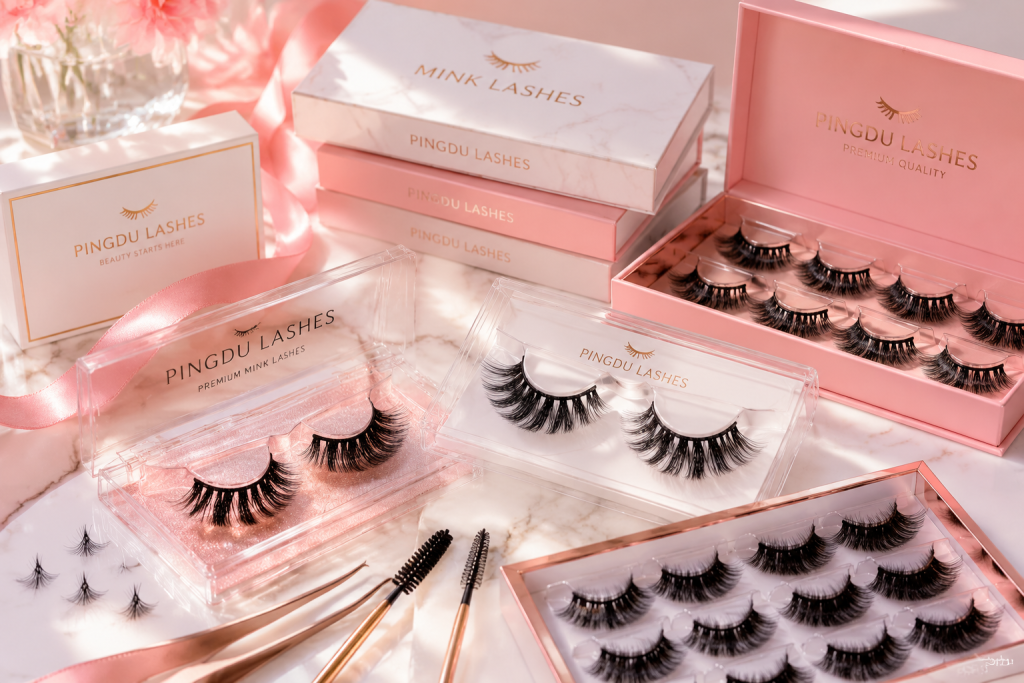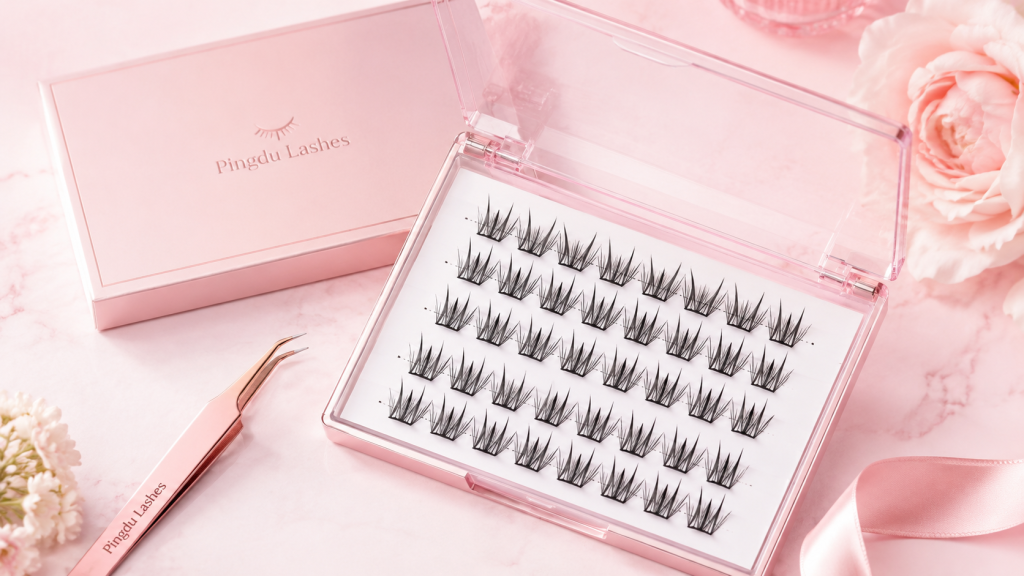
Spider lash clusters feature visible, separated spikes that create a more defined lash pattern than conventional evenly distributed cluster lashes. The style can be developed in natural, wispy or dramatic directions, giving beauty brands another way to expand their DIY lash collections.
For wholesale buyers, “spider lashes” should be treated as a visual style direction rather than a complete product specification. Spike length, spacing, density, curl, band construction, tray arrangement and application format must all be confirmed before sample development or bulk ordering.
What Are Spider Lash Clusters?
Spider lash clusters use longer, more visible lash sections to form separated points along the lash line. Shorter fibers or clusters may be positioned between the main spikes to maintain coverage and create contrast.
The finished appearance depends on several structural details:
- Spike length: How far the main points extend beyond the supporting fibers.
- Spike spacing: The distance between visible lash points.
- Base density: The amount of shorter fiber used between the spikes.
- Curl: The lift and direction of the finished lash style.
- Length progression: Whether the style is balanced, doll-eye, open-eye or extended toward the outer corner.
- Band construction: The width, flexibility and appearance of the cluster base.
Because these details can vary significantly, beauty brands should avoid approving a spider lash product from its name or tray photograph alone.
Spider Lashes vs Manga, Wet Look and Wispy Lashes
Several popular lash styles use separated fibers or visible points, but their structures and retail positioning are not identical.
| Lash Style | Typical Visual Direction | Buyer Should Confirm |
|---|---|---|
| Spider lash clusters | Clearly separated, elongated spikes with visible contrast | Spike width, spacing, length difference and base density |
| Manga or anime lashes | Illustrated, doll-like pattern with deliberate long and short sections | Lash map, spike position and symmetry |
| Wet look lashes | Narrow, closed-looking spikes with a glossy or freshly styled effect | Spike closure, density and consistency across the tray |
| Wispy lashes | Soft variation in length with less structured separation | Length variation, softness and overall density |
Buyers comparing related pointed styles can also review our wet look cluster lashes for private label brands.
Key Specifications for Product Development
1. Spike Structure
The spike structure is the most important characteristic of this style. Buyers should specify whether they require narrow, defined spikes or wider sections containing more fibers.
The difference between the main spikes and the supporting lashes should also be confirmed. A small length difference creates a softer result, while stronger contrast produces a more visible spider-inspired pattern.
2. Length Arrangement and Lash Map
A mixed-length tray should include a written length arrangement, not only a minimum and maximum length. Two trays containing the same length range can create very different results if the number of clusters and distribution of each length are different.
Beauty brands may develop several mapping directions:
- Balanced spikes across the complete lash line.
- Longer center sections for an open-eye or doll-eye effect.
- Gradually extended outer sections for a cat-eye direction.
- Shorter natural styles with controlled spike contrast.
- Coordinated upper and bottom lash cluster concepts.
3. Curl and Density
Curl changes both the front view and side profile of the spikes. Buyers should compare the requested curl across short and long clusters because the same curl designation may appear different at different lengths.
Density should be evaluated together with color and spike width. A dense black style can look dramatic, while a lighter base or reduced density may be more suitable for natural and Asian-inspired collections.
4. Band and Application Format
Spider lash clusters may be developed in glue-on or pre-glued formats, depending on supplier capability and the buyer’s target product. Band width, flexibility, color and pickup stability should be tested with the selected application format.
Pre-glued and glue-on products require separate specification and sample confirmation. They should not share unverified application or wear-time claims.
Wholesale Specification Checklist
| Specification | Questions for the Buyer |
|---|---|
| Spike design | How narrow, long and separated should the spikes appear? |
| Length range | Which lengths and how many clusters of each length are required? |
| Curl | Which curl matches the target collection and reference sample? |
| Density | Should the supporting lash layer be natural, medium or more defined? |
| Band | What band construction, width, color and flexibility are required? |
| Application | Is the target product pre-glued or designed for separate adhesive? |
| Tray format | How many rows, clusters and length sections should the tray contain? |
| Packaging | Is standard, customized or private label packaging required? |
Sample Testing Before Bulk Ordering
Physical sample testing is particularly important for spider lash clusters because small changes to spacing, spike length or density can noticeably alter the finished pattern.
A wholesale sample evaluation should include:
- Visual comparison: Compare the sample with the approved reference image and target lash map.
- Tray consistency: Check whether the spike structure remains consistent across different rows and positions.
- Length verification: Confirm the selected lengths and their distribution inside the tray.
- Pickup test: Evaluate whether clusters can be removed without damaging the spike or band.
- Application test: Review placement, spacing and the finished lash pattern.
- Packaging test: Confirm that the tray protects the pointed structure during handling and transportation.
Use our cluster lash sample testing guide to create a repeatable evaluation process.
Private Label Packaging and Collection Planning
Spider lash clusters may be positioned as a standalone trend product or as part of a broader spiky lash collection. A brand could organize related styles by intensity, lash map, length range or application format.
Before confirming packaging, wholesale buyers should consider:
- Clear style and length identification.
- Product codes that distinguish similar spike configurations.
- Tray dimensions and cluster arrangement.
- Approved logo, artwork and printed material versions.
- Multi-style ordering and inventory allocation.
- Consistency between initial production and replenishment orders.
Read our private label lash packaging guide for additional planning details.
Sourcing Spider Lash Clusters in Pingdu
Pingdu’s eyelash supply network includes different lash styles, production resources and packaging capabilities. For a trend-led product such as spider lash clusters, the sourcing process should begin with a clear visual reference and target specification.
Pingdu Lashes can assist beauty brands, wholesalers, importers and distributors with supplier matching, specification confirmation, sample coordination and private label planning. Final style, lengths, curl, band, application format, packaging, MOQ, price and lead time must be confirmed according to the selected supplier and approved sample.
Buyers can review our eyelash product and sourcing categories or learn more about our custom eyelash and private label service.
Develop Spider Lash Clusters for Your Brand
Send us your reference image, target spike pattern, lengths, curl, application format and packaging requirements. We can help coordinate supplier matching and sample-based specification development.