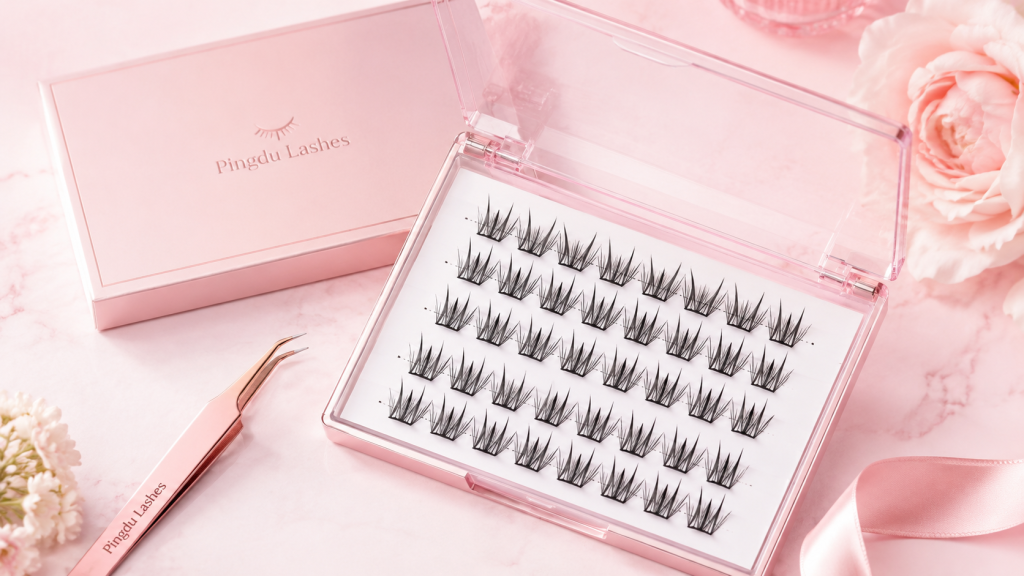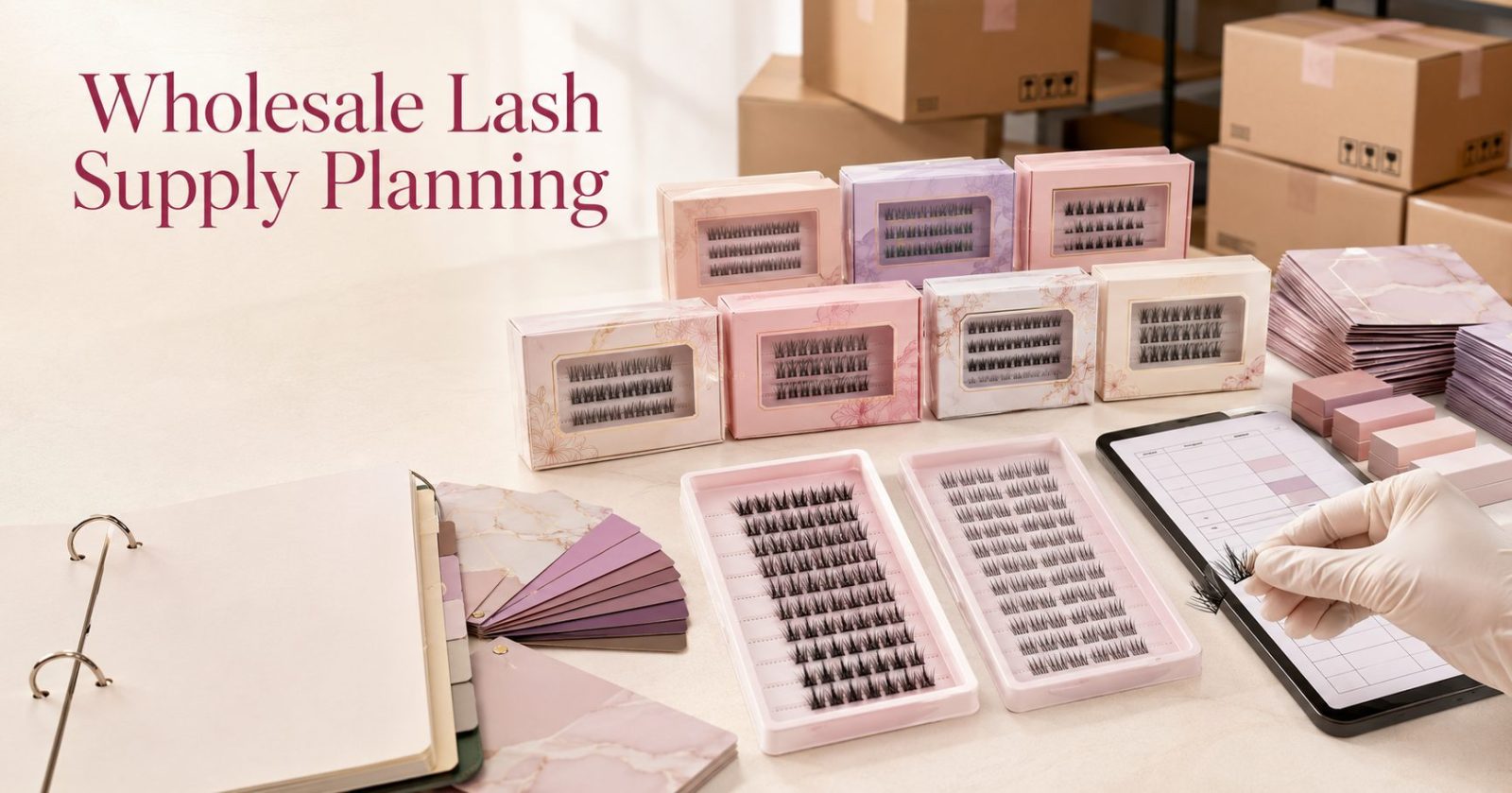
Wholesale lash supply planning is an important process for distributors, importers, established beauty brands, and private label buyers managing multiple products and repeat orders. A long-term supply program requires more than selecting individual lash styles. Buyers need a structured product range, approved specifications, packaging records, inventory planning, and a clear process for maintaining consistency between orders.
This guide explains how commercial buyers can organize wholesale cluster lashes, pre-glued cluster lashes, glue-on cluster lashes, strip lashes, and private label packaging as part of a scalable supply program.
Define the Commercial Supply Objective
A professional wholesale project should begin with a clear commercial objective. Buyers need to identify the countries or regions being served, distribution channels, customer groups, product categories, expected purchasing volume, and frequency of repeat orders.
A regional distributor may require several product categories for different retail channels. An established private label brand may focus on a smaller number of core products but require consistent specifications, branded packaging, and regular replenishment. A beauty supply company may need products that can be distributed across physical stores, professional accounts, and online channels.
Defining the commercial objective helps both buyer and supplier evaluate which products, packaging structures, and order arrangements are suitable for long-term cooperation.
Build a Structured Product Range
A wholesale product range should be planned around customer demand and sales channels rather than a collection of unrelated styles. Buyers can divide their range into clear categories such as cluster lashes, pre-glued cluster lashes, glue-on cluster lashes, strip lashes, and private label products.
Within each category, products can be organized by application format, visual effect, packaging structure, and market position. This makes it easier for distributors to prepare catalogues, manage stock, communicate with retailers, and evaluate the performance of individual product groups.
Commercial buyers can review available lash products when preparing an initial product range. Only confirmed products and formats should be included in catalogues or purchasing plans.
Create a Specification Record
Each wholesale product should have an approved specification record. The record may include the product name, format, row count, number of clusters or lash units, confirmed lengths, curl, material, band or base structure, tray, inner card, outer box, barcode information, and packaging artwork version.
Specifications must be recorded product by product. Information from one lash style should not automatically be applied to another product. A design available in a pre-glued format may not be available in a glue-on format, different row count, or alternative packaging structure.
Reference pictures can communicate a visual direction, but they do not prove that an identical product is available. Commercial buyers should base final product records on approved real samples and confirmed supplier information.
Approve Master Samples
Master samples provide a reference for purchasing, packaging, and repeat-order evaluation. Before approving a product for commercial distribution, buyers should confirm that the sample matches the intended product format, presentation, and target market.
The approved sample should be connected to a written specification record and packaging version. Real photographs can also be stored with the purchasing file so that product, sales, and quality teams are working from the same reference.
AI-generated images may support campaign concepts or visual planning, but they should not replace real product photographs in product catalogues, wholesale presentations, or sales pages. Customers must be able to distinguish between an approved product and a custom development concept.
Our cluster lash sample testing guide explains the main points buyers can review during sample approval.
Plan Commercial Order Volumes
Order planning should consider expected sales, replenishment time, shipping method, packaging production, inventory capacity, and seasonal demand. Distributors should also identify which products will operate as permanent core items and which products will receive more limited inventory allocation.
Product MOQ and packaging MOQ should be evaluated separately. Standard products, printed cards, branded boxes, special materials, molds, and unusual internal structures may have different production requirements.
The final order structure must be confirmed according to the actual product and packaging combination. Buyers should avoid assuming that one MOQ applies permanently to every style, packaging option, or customized project.
Coordinate Private Label Packaging
Private label packaging requires its own planning process. Buyers should confirm the logo, artwork, box structure, tray or inner card, product name, barcode, printed information, destination-market requirements, and shipping protection before mass preparation.
Packaging materials may also need to be managed across repeat orders. Commercial buyers should maintain records of approved artwork files, printing colors, packaging quantities, material versions, and any remaining packaging inventory.
If the lash product changes, the packaging information should be reviewed again. A box or card designed for one product format should not automatically be reused for another product without confirming the fit and printed details.
Read our guide to private label lash packaging for additional packaging considerations.
Protect Repeat-Order Consistency
Repeat-order consistency is essential for distributors and established brands. Every reorder should refer to the approved product specification, master sample, packaging artwork, quantity, and any previously confirmed changes.
If the product structure, fiber, tray, card, box, or packaging process changes, the buyer may need to review a new sample before approving the next commercial order. Changes should be documented rather than communicated only through informal messages.
A consistent product record helps reduce misunderstandings between purchasing teams, suppliers, packaging providers, warehouses, and sales channels. It also allows the buyer to compare later orders with the original approved standard.
Establish Quality Review Points
Wholesale buyers should define the quality points that matter for their product range. Depending on the confirmed product, these may include visual consistency, lash arrangement, curl presentation, band or base appearance, tray placement, packaging condition, printed information, barcode accuracy, and quantity.
The inspection points should reflect the approved specification instead of relying on general descriptions such as “premium,” “natural,” or “high quality.” Written and visual references provide a clearer basis for communication.
Buyers should also establish how product differences, packaging errors, or specification changes will be reported and reviewed before shipment. The exact quality process must be confirmed for each supply project.
Prepare a Commercial RFQ
A structured request for quotation helps suppliers understand the size and requirements of a wholesale program. Distributors, importers, and established brands should prepare:
- Company name, website, and business type
- Target countries and distribution channels
- Required lash categories and product references
- Confirmed or requested specifications
- Estimated quantity by product or SKU
- Expected repeat-order frequency
- Private label and packaging requirements
- Barcode and printed information requirements
- Required sample and approval process
- Destination country and preferred shipping method
A complete RFQ allows the product, packaging, quantity, and customization requirements to be evaluated together. It also makes quotations from different suppliers easier to compare on an equivalent basis.
Develop a Long-Term Supply Program
A long-term wholesale relationship should be built around clear specifications, commercial order planning, documented packaging, repeat-order records, and professional communication. This is more reliable than selecting products only according to short-term trends or comparing quotations only by unit price.
Pingdu Lashes supports distributors, importers, established lash brands, beauty supply companies, and private label buyers with product sourcing, sample discussion, packaging customization, and bulk order preparation from Pingdu, China.
Visit our custom service page or contact Pingdu Lashes with your company information, required products, specifications, commercial quantities, destination market, and packaging requirements.
Request a Wholesale Supply Quote