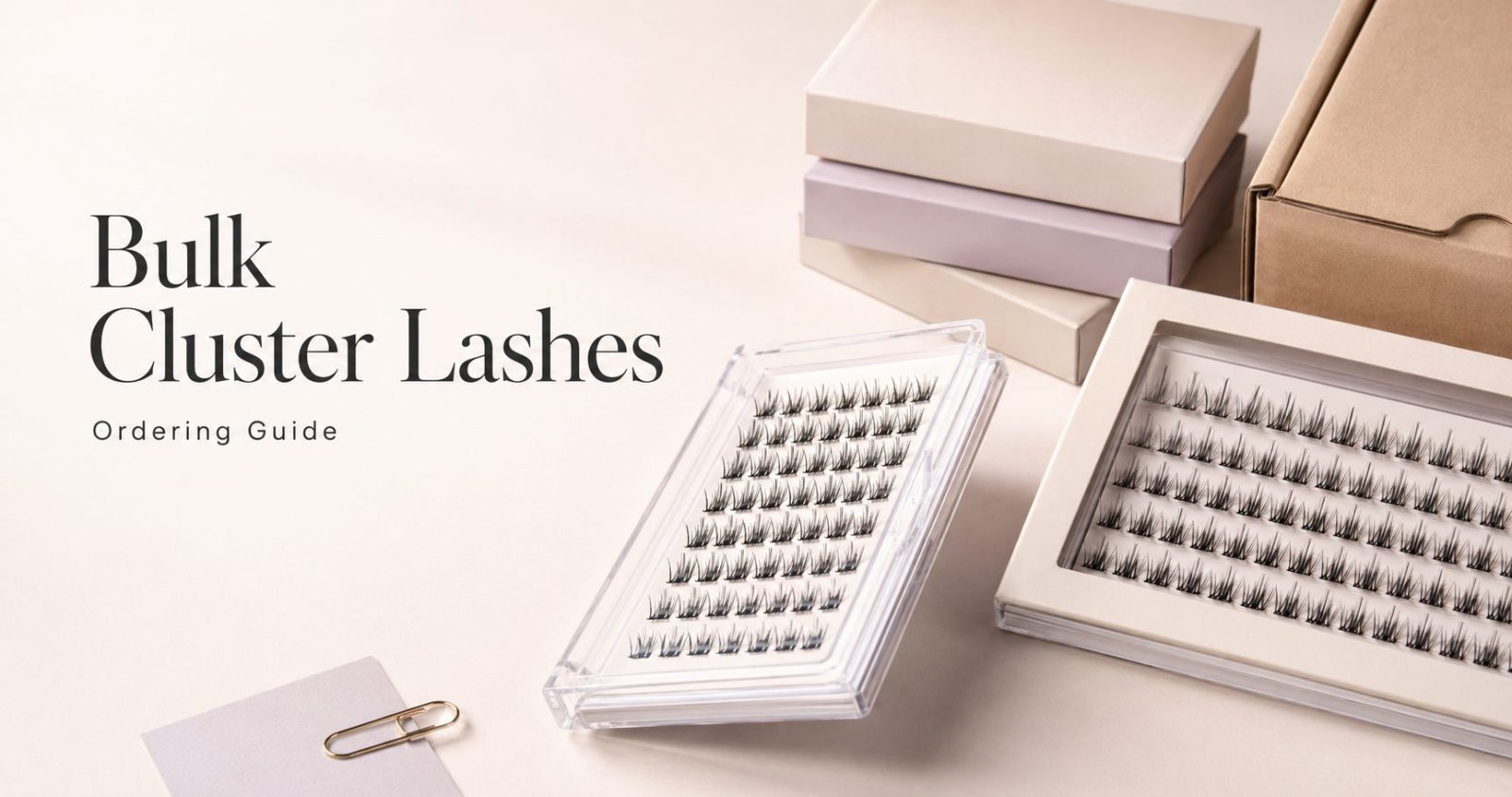
Bulk cluster lashes are purchased by eyelash distributors, importers, established beauty brands, beauty supply companies and online retailers that need products for resale. A commercial order may include different lash styles, tray formats, application systems and private label packaging.
Ordering in bulk requires more preparation than selecting an attractive product photograph. Buyers must define the product format, confirm real samples, organize the SKU range, prepare packaging and establish quality requirements for production and repeat orders.
This guide focuses on DIY retail cluster lashes. It does not treat professional premade volume fans as the same product category. Buyers should clearly distinguish these products when communicating with suppliers.
Define What Bulk Cluster Lashes Mean
The word “bulk” describes a commercial purchasing requirement, but it does not represent one permanent quantity. A distributor ordering for several retail stores may have different requirements from a beauty brand preparing a private label launch.
Before requesting a quotation, the buyer should explain the company type, destination market, sales channel and forecast quantity. The supplier can then assess suitable products, packaging and order conditions.
Buyers should also confirm whether they require ready-to-sell boxed products, unbranded trays, customized packaging or a combination of several formats. Minimum quantities depend on the selected lash, packaging materials, printed components and level of customization.
Select the Correct Cluster Lash Format
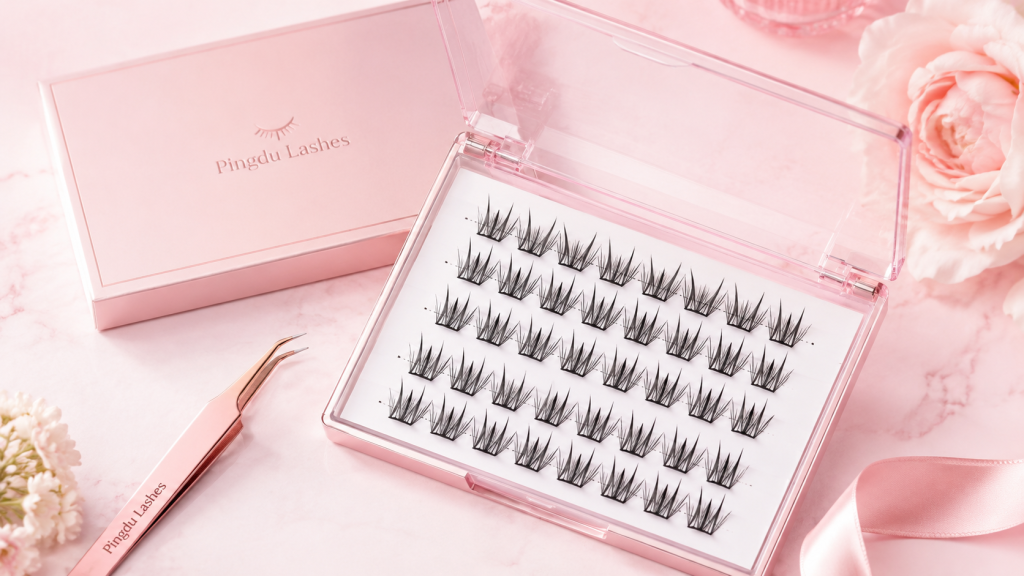
DIY cluster lashes can be supplied in different application formats. Pre-glued clusters have an adhesive section prepared on the lash base. Glue-on clusters require the final customer to use a compatible adhesive system separately.
These two formats should not be described as identical products. Their trays, instructions, accessories, packaging and customer expectations may be different.
Possible tray directions may include different row counts, cluster quantities or mixed-length arrangements. However, a particular style should only be offered in a specific format after the combination has been confirmed through actual product information and samples.
Buyers comparing these formats can also read our Glue-On Cluster Lashes Buying Guide.
Build a Commercial Style Assortment
A bulk order does not need to contain every available style. A carefully organized assortment is usually easier to present, stock and reorder than a catalog filled with similar-looking products.
Buyers can divide the range into several visual directions, such as natural, wispy, elongated, defined and fuller-volume effects. The final selection should reflect the intended market rather than a general assumption that one style is popular everywhere.
Core styles can be selected for regular replenishment, while secondary styles can be used to test new visual directions. Each confirmed style should have a stable product name or reference number. If the buyer uses its own marketing name, that name should remain connected to the supplier’s approved sample reference.
AI-generated images may be used for creative inspiration, but they should not represent an actual product unless the finished lash has been developed and confirmed.
Confirm Specifications Before Quotation
A useful bulk cluster lash inquiry should provide more information than a reference photograph. Depending on the product, relevant points may include:
- pre-glued or glue-on application format;
- required tray or row arrangement;
- preferred style and visual density;
- single-length or mixed-length presentation;
- lash curl and length direction;
- lash base or band preference;
- number of selling units required;
- standard or private label packaging;
- required accessories or printed instructions.
Specifications must be based on supplier confirmation. Materials, curl, length, cluster count, adhesive performance and other technical details should not be copied from an unrelated product page.
Approve Samples Before Bulk Ordering
Physical samples help the buyer determine whether the product matches the intended retail position. Photographs alone cannot fully show softness, symmetry, base construction, tray removal or consistency between several units.
During sample evaluation, buyers can check the lash pattern, left-to-right consistency, cluster separation, lash base, tray arrangement and package condition. For pre-glued products, the adhesive section should also be reviewed according to the intended application instructions.
Sample feedback should be recorded with photographs and product reference numbers. After approval, the confirmed sample can serve as a comparison reference for the commercial order.
Our Cluster Lash Sample Testing Guide provides a more detailed framework for this stage.
Choose Mixed Styles or Single Styles
Wholesale buyers may purchase a single style in larger quantities or divide an order across several approved styles. The better structure depends on sales history, inventory capacity and the purpose of the order.
Single-style purchasing can support replenishment of an established bestseller. A mixed assortment can help a distributor serve several customer preferences, but it also creates more SKUs, packaging files and inventory records.
When requesting a mixed order, list the required quantity for every style instead of providing only the total quantity. The supplier must also confirm whether the proposed product and packaging combinations can be produced together under the requested commercial conditions.
Prepare Private Label Packaging
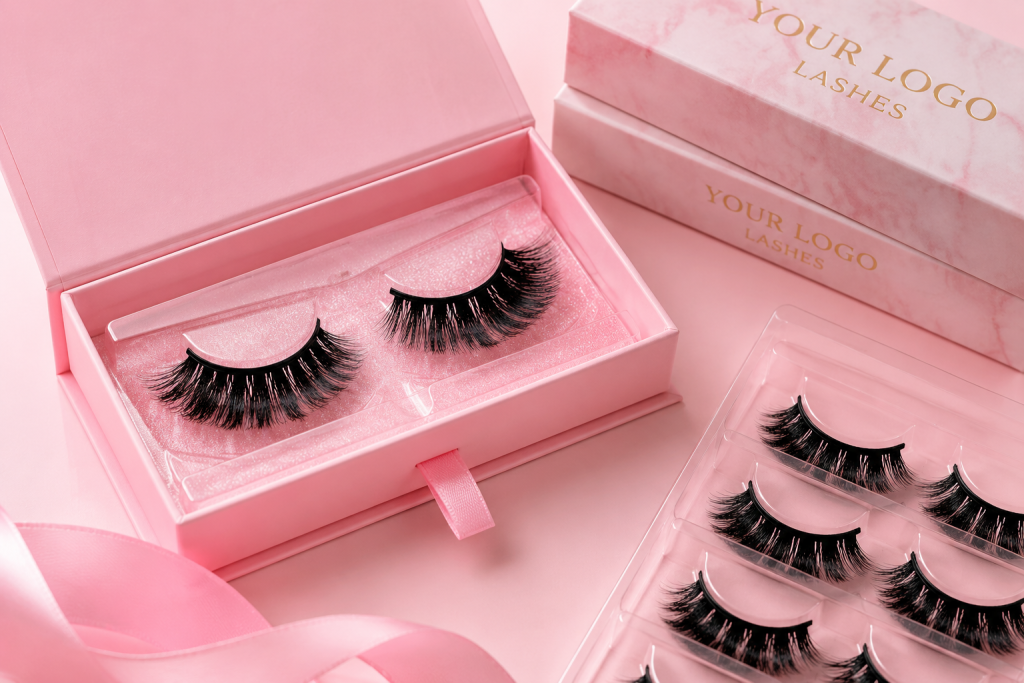
Private label packaging turns the lash tray into a branded retail product. Buyers may require a logo, product name, style reference, barcode, instructions, labels and market-specific information.
The packaging artwork must match the real contents. A box should not display a different tray arrangement, cluster quantity or accessory combination from the actual product.
Custom orders normally start from one carton per approved style, with 200 boxes per carton. This is not a permanent MOQ for every project. Special trays, new structures, special materials, printed cards, accessories or completely new packaging may require a higher quantity.
Final MOQ, packaging costs and production requirements must be confirmed after the complete product and packaging combination has been reviewed. Visit our Custom Service page for private label coordination information.
Establish Bulk Order Quality Requirements
Once the product and packaging have been approved, the buyer should establish written quality checkpoints. These may cover lash symmetry, cluster arrangement, base consistency, tray condition, package accuracy, labels and carton packing.
General terms such as “premium quality” are not precise enough for production control. Approved samples, product references, packaging files and written requirements provide a clearer standard.
If an order contains multiple styles, the product and outer carton labels should make those styles easy to identify. This helps the buyer receive, count, store and distribute the order correctly.
Plan Quantities and Repeat Orders
A bulk purchasing plan should consider both the first order and future replenishment. Buyers can separate products into core SKUs, secondary SKUs and test styles, then allocate quantities according to sales expectations and available inventory space.
Records should be kept for approved samples, style numbers, packaging files and order changes. When a successful product is reordered, the buyer should reference the previous approved version and identify any requested changes clearly.
Prices, product availability, MOQ and production schedules can change according to the order details. They should therefore be reconfirmed for every purchase. Buyers managing several categories can review our Wholesale Lash Supply Planning Guide.
Send a Complete Purchasing Brief
To receive an initial sourcing assessment, provide your company type, target market, preferred cluster lash format, reference styles, required tray arrangement, forecast quantity, packaging needs and purchasing schedule.
If the exact product has not yet been selected, explain the intended customer and sales channel. Suitable supplier samples can then be compared before any specifications are presented as confirmed supply.
Pingdu Lashes supports distributors, importers, established beauty brands and beauty supply companies with supplier matching, sample coordination, private label packaging and repeat-order planning from the Pingdu eyelash supply chain.
Contact Pingdu Lashes with your bulk cluster lash requirements to begin the sourcing and sample assessment process.