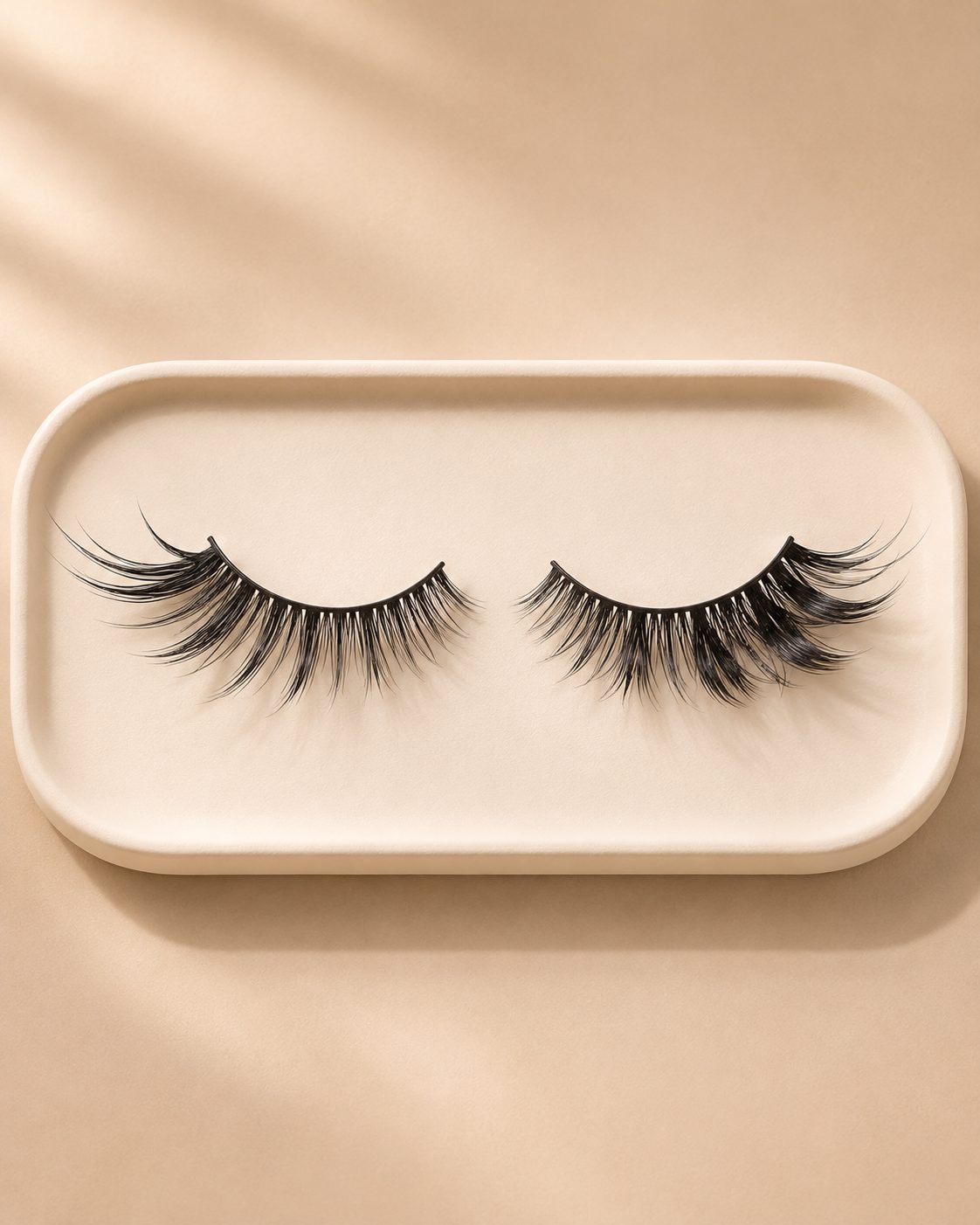
Asymmetric Editorial Strip Lashes — Sculptural Design Concept
Quotation based on specification
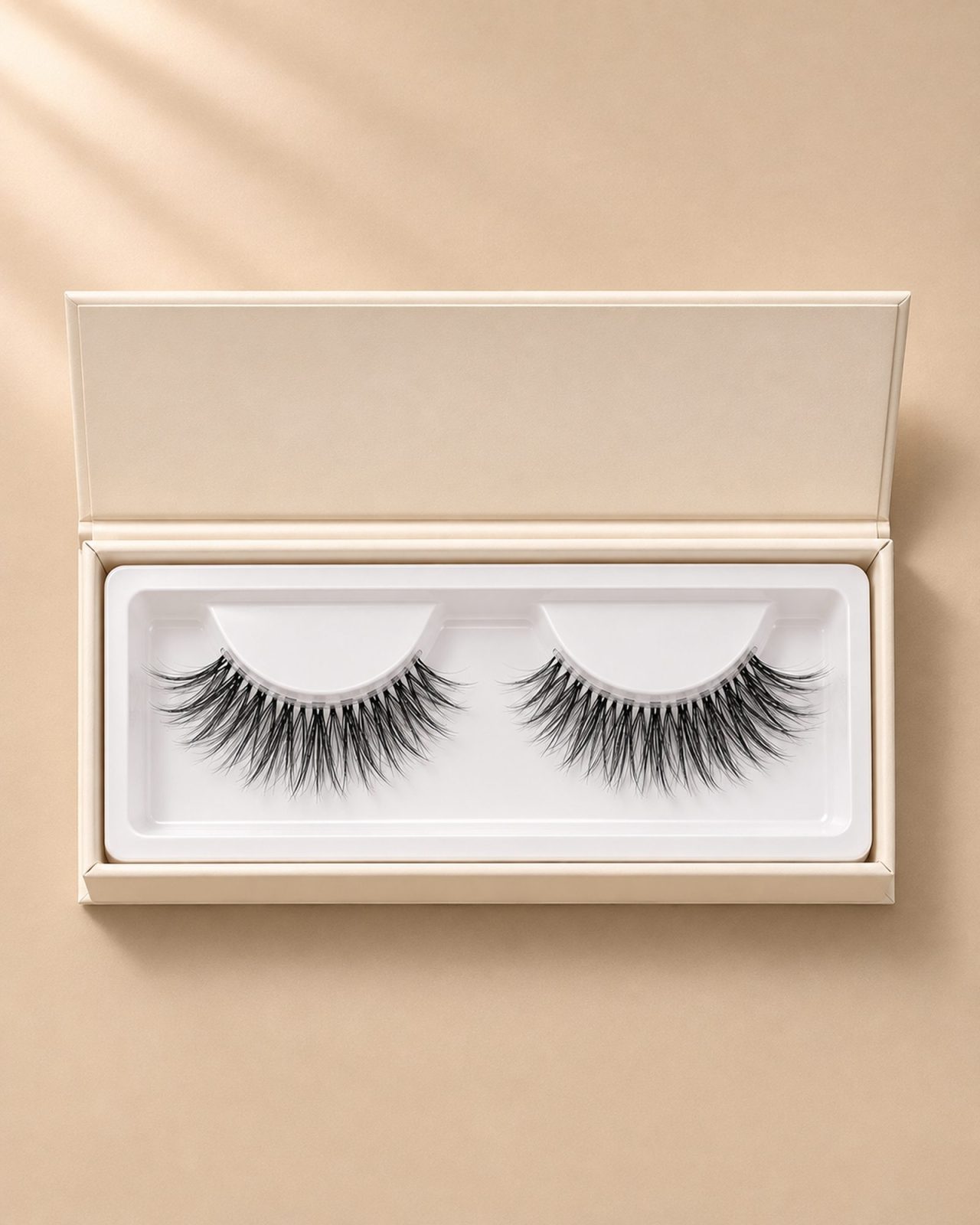
Asymmetric Editorial Strip Lashes explore intentional differences between left and right lash silhouettes for a sculptural, fashion-oriented visual concept.
Created as a design direction for premium beauty brands exploring original lash collections and private label development. Final structure, materials, appearance and sample availability require feasibility review and physical validation.
Wholesale enquiry only
Pricing, MOQ, sample arrangements and lead time are confirmed against the product specification and order quantity.
Asymmetric Editorial Strip Lashes — Sculptural Design Concept explore an unconventional approach to eyelash design in which the left and right lash silhouettes are intentionally different but visually connected.
Rather than relying on perfectly mirrored shapes, this concept investigates how controlled asymmetry, sculptural composition and directional emphasis can create a distinctive aesthetic for editorial beauty and design-led makeup collections.
The purpose is not to make two unrelated lash styles appear together. It is to explore how deliberate differences can work as one cohesive visual statement.
Developed as a creative direction for premium beauty brands, the concept offers an opportunity to discuss original lash design beyond conventional symmetric silhouettes.
Development status: This is a proposed design concept, not a confirmed finished product. The left-right compositions, physical structure, materials, band construction, on-eye appearance and manufacturing feasibility require evaluation and sample approval before any final specifications or commercial availability can be confirmed.
Design Philosophy: Asymmetry with Intention
Symmetry is a familiar principle in false eyelash design. Most conventional strip lash pairs follow corresponding left and right patterns to create a balanced appearance.
Asymmetric design explores a different visual relationship.
Instead of requiring both eyes to carry identical emphasis, the creative direction allows the two silhouettes to express complementary characteristics.
One side may feature a stronger visual focal point, while the other presents a more restrained composition. Alternatively, both sides may share a common design language while placing emphasis in different positions.
The important distinction is that the asymmetry must be intentional.
A difference caused by inconsistent manufacturing is not the same as an approved asymmetric design.
For a proposed asymmetric lash pair, the brand should define the intended differences before prototyping and evaluate whether the physical samples reproduce those differences consistently.
What Makes This Concept Different?
The design direction is built around four principles.
1. Deliberate Left-Right Variation
The proposed concept explores a pair of lash silhouettes that are not exact visual mirrors.
The variation may involve the position of prominent sections, the distribution of visual weight or the relationship between restrained and expressive areas.
These design decisions must be documented rather than left to chance.
2. Sculptural Silhouette
The overall outline is treated as a creative composition.
Instead of simply increasing length or density, the concept examines how selected sections can establish direction, contrast and a distinctive visual structure.
The intended silhouette should remain recognizable when the design is considered as a complete pair.
3. Controlled Visual Balance
Asymmetry does not automatically mean visual imbalance.
Two different silhouettes may still be connected through shared proportions, texture, visual intensity or other design codes.
The creative challenge is to establish a relationship between the two sides without making them identical.
4. Editorial Expression
This concept is intended for brands interested in more expressive makeup design.
Potential creative contexts include fashion editorials, conceptual beauty photography, artistic makeup collections and other projects in which visual differentiation is a priority.
These are possible positioning directions, not claims of completed projects or confirmed customer applications.
Three Proposed Asymmetric Design Directions
The concept may be explored through different creative interpretations.
The following are preliminary design ideas for discussion, not finished or approved product variations.
Concept A: Offset Sculptural Emphasis
One lash silhouette may feature a stronger focal area toward its outer portion, while the complementary side explores a different placement of visual emphasis.
The goal is to investigate whether the two shapes create an intentional overall composition when viewed together.
This direction requires careful consideration of silhouette, density and the visual relationship between both eyes.
Concept B: Complementary Layering
This direction explores a shared approach to layered texture while allowing each side to arrange visible elements differently.
One silhouette might concentrate its visual depth in a selected region, while the other explores a contrasting distribution.
The creative objective is to retain a recognizable relationship between the two sides without duplicating the same structure.
The final arrangement and feasibility would need to be confirmed through physical development.
Concept C: Minimal-to-Statement Contrast
A more expressive interpretation may explore a restrained silhouette on one side and a more pronounced composition on the other.
The challenge is to achieve a deliberate design relationship rather than an accidental mismatch.
The contrast should support the intended makeup concept and remain subject to on-eye visual evaluation.
Each direction would require its own creative brief and prototype review before being considered for a physical product.
How Does Asymmetric Design Compare with Conventional Lash Styles?
The proposed Asymmetric Editorial concept should be distinguished from existing product categories and design directions.
| Design Direction | Primary Focus | Key Difference |
|---|---|---|
| Conventional Cat Eye Strip Lashes | A defined directional silhouette | Generally emphasizes a corresponding shape across the lash pair |
| Spiky Strip Lashes | Visible spikes and texture | Focuses on the arrangement of pronounced fiber groups |
| Sculpted Layered Strip Lashes | Layering and structured visual depth | Explores sculptural texture within the lash design |
| Asymmetric Editorial Strip Lashes | Intentional differences between left and right silhouettes | Explores complementary but non-identical visual compositions |
These distinctions describe design intentions, not guaranteed physical differences.
A proposed asymmetric product must be evaluated against existing styles to determine whether the final design offers a recognizable and meaningful visual difference.
For reference, explore our existing Cat Eye Strip Lashes and Spiky Strip Lashes.
Our Sculpted Layered Strip Lashes concept also provides a related creative direction focused on dimensional composition rather than deliberate left-right asymmetry.
Developing a Consistent Visual Language
For premium beauty brands, originality is not simply a matter of making a design unusual.
A distinctive product should still reflect the wider identity of the brand.
When exploring asymmetric lash design, a creative brief can identify the characteristics that should connect both sides of the pair.
These may include:
- Shared aesthetic direction: The overall mood and intended visual expression.
- Silhouette relationship: How the left and right shapes should complement one another.
- Visual intensity: The intended balance between restrained and prominent sections.
- Texture language: How layering, spacing and fiber groupings should contribute to the design.
- Color direction: Any preferred color palette or tonal relationship, subject to feasibility review.
- Brand relevance: How the proposed design fits the wider collection identity.
Maintaining these design codes can help an asymmetric pair appear intentional rather than inconsistent.
This approach also connects to collection planning.
A brand could explore an editorial statement piece as part of a broader capsule collection, provided the new design has a distinct role and remains compatible with the collection’s overall identity.
For more information, read our guide to building a cohesive lash capsule collection without repeating styles.
From Design Sketch to Physical Prototype
Asymmetric lash development requires particular attention to the relationship between design intention and physical execution.
A sketch can communicate the concept, but it cannot establish whether the proposed composition will work as intended in a finished lash pair.
Before development, the brand should identify the questions that need to be answered through physical sampling.
| Review Area | Question | Confirmation Required |
|---|---|---|
| Left-Right Silhouette | Are the intended differences clearly defined? | Approved design references |
| Visual Relationship | Do both sides create one coherent composition? | Paired visual evaluation |
| Fiber Arrangement | Can the proposed layout be translated into a physical structure? | Feasibility assessment |
| Lash Band Construction | Can each side be constructed to meet its approved requirements? | Physical sample assessment |
| On-Eye Appearance | Does the design express the intended editorial effect when applied? | Application-based visual review |
| Consistency | Can the approved left and right designs be reproduced as specified? | Repeatability evaluation |
| Final Approval | Does the physical pair meet the agreed design and practical requirements? | Approved reference samples |
This is a suggested evaluation framework, not a claim that the proposed concept has already completed prototype development.
Why On-Eye Evaluation Matters
A flat design drawing cannot fully represent how an asymmetric lash pair may appear when applied.
The final visual effect can be influenced by eye shape, placement, natural lashes and the surrounding makeup.
Brands should assess the physical samples under relevant and consistent viewing conditions.
Any practical requirements concerning fit, attachment, construction, comfort or wear should be evaluated separately rather than inferred from the design illustration.
It is also important to distinguish intentional design variation from unintended differences between samples.
For more guidance on concept evaluation, see our article on deciding whether a lash design is ready for prototyping.
Proposed Product Specifications
The following table distinguishes the creative proposal from technical characteristics that remain unconfirmed.
| Item | Current Status |
|---|---|
| Product Name | Asymmetric Editorial Strip Lashes |
| Product Type | Proposed full strip false lash design |
| Design Direction | Intentional left-right silhouette variation |
| Intended Aesthetic | Sculptural and editorial beauty |
| Final Silhouette | To be determined through design development |
| Fiber Material | To be confirmed |
| Fiber Length and Curl | To be confirmed |
| Density and Layering | To be confirmed |
| Color | Subject to approved creative brief |
| Lash Band Construction | To be confirmed |
| Physical Samples | Availability and development arrangements to be confirmed |
| Packaging Options | Subject to project requirements and feasibility |
| MOQ and Lead Time | To be confirmed following project review |
Custom Asymmetric Lash Design for Premium Beauty Brands
For a brand exploring editorial or design-led beauty products, an asymmetric lash concept may offer an opportunity to investigate a distinctive creative identity.
The value of the concept depends on more than visual novelty.
Its proposed differences should be intentional, clearly communicated and capable of being evaluated through physical development.
Pingdu Lashes focuses on design-led discussions with beauty brands exploring custom eyelash products and private label development.
Brands interested in investigating an asymmetric concept can begin by providing:
- a creative brief describing the intended editorial direction;
- sketches or reference images for both left and right silhouettes;
- an explanation of which differences are intentional;
- preferred visual intensity, texture and overall proportions;
- the intended makeup application or styling context;
- design characteristics that should remain consistent across the pair;
- questions to be investigated through samples;
- preliminary packaging and collection requirements, where relevant.
These materials can support an initial discussion about creative direction, feasibility and possible development steps.
Specific customization capabilities, physical sample arrangements, production conditions and commercial commitments require confirmation for each project.
Frequently Asked Questions
What are asymmetric editorial strip lashes?
They are a proposed design direction in which the left and right lash silhouettes intentionally differ while remaining part of a coordinated visual composition. The final appearance depends on the approved design and physical sample development.
Are asymmetric lashes the same as cat eye lashes?
No. Cat eye styling generally describes a directional lash silhouette. The asymmetric editorial concept focuses specifically on intentional differences between the two sides of a lash pair. Physical sample review is needed to establish the final distinction.
Does asymmetric design mean the two lashes are manufactured inconsistently?
No. In an intentional asymmetric concept, the differences must be defined in the approved design. Unintended variation between physical samples is a separate issue that should be identified during evaluation.
Can an asymmetric lash design be customized for a beauty brand?
Brands can submit sketches, reference images and creative requirements for a custom development discussion. Technical feasibility and available production options must be confirmed before making commitments.
Are finished asymmetric lash samples currently available?
Finished sample availability has not been confirmed for this concept. It should be treated as a proposed development direction until its physical construction and specifications have been validated.
Can asymmetric editorial lashes be included in a capsule collection?
Potentially. A distinctive editorial style may have a role within a wider collection if it shares the brand’s design language and contributes meaningful variety. The proposed product and collection strategy should be evaluated together.
Explore a Different Approach to Lash Design
Original eyelash design does not always need to begin with a perfectly mirrored pair.
When approached intentionally, asymmetry can become a creative tool for exploring contrast, direction and sculptural expression.
The Asymmetric Editorial Strip Lashes concept invites premium beauty brands to consider how two different silhouettes might create one recognizable visual statement.
Planning an original editorial lash concept? Share your design references and creative brief with Pingdu Lashes to discuss whether the proposed direction can move toward physical development.
Product category: Strip Lashes
Ask about the specifications for this product when requesting samples or pricing.
Private Label & OEM Development
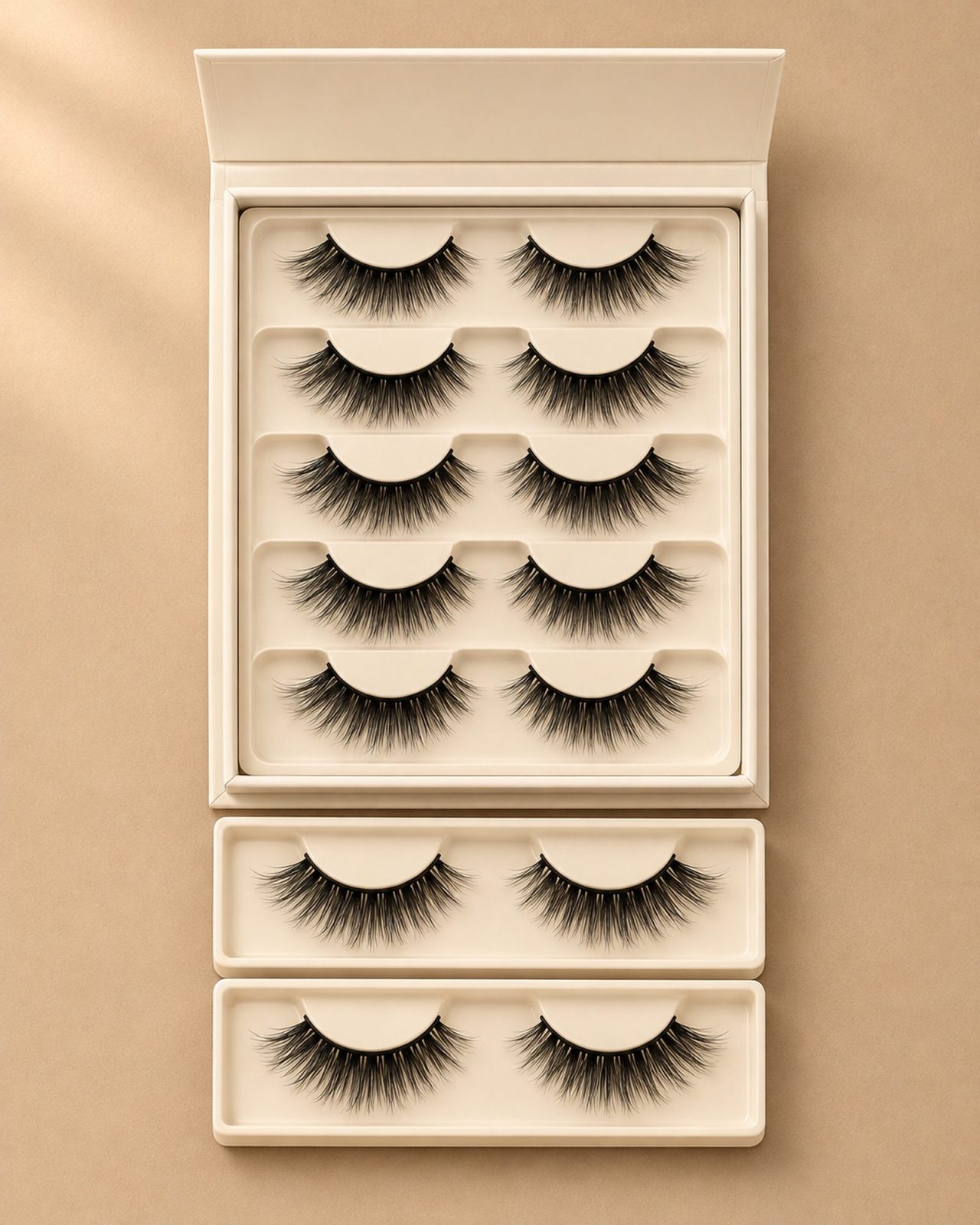
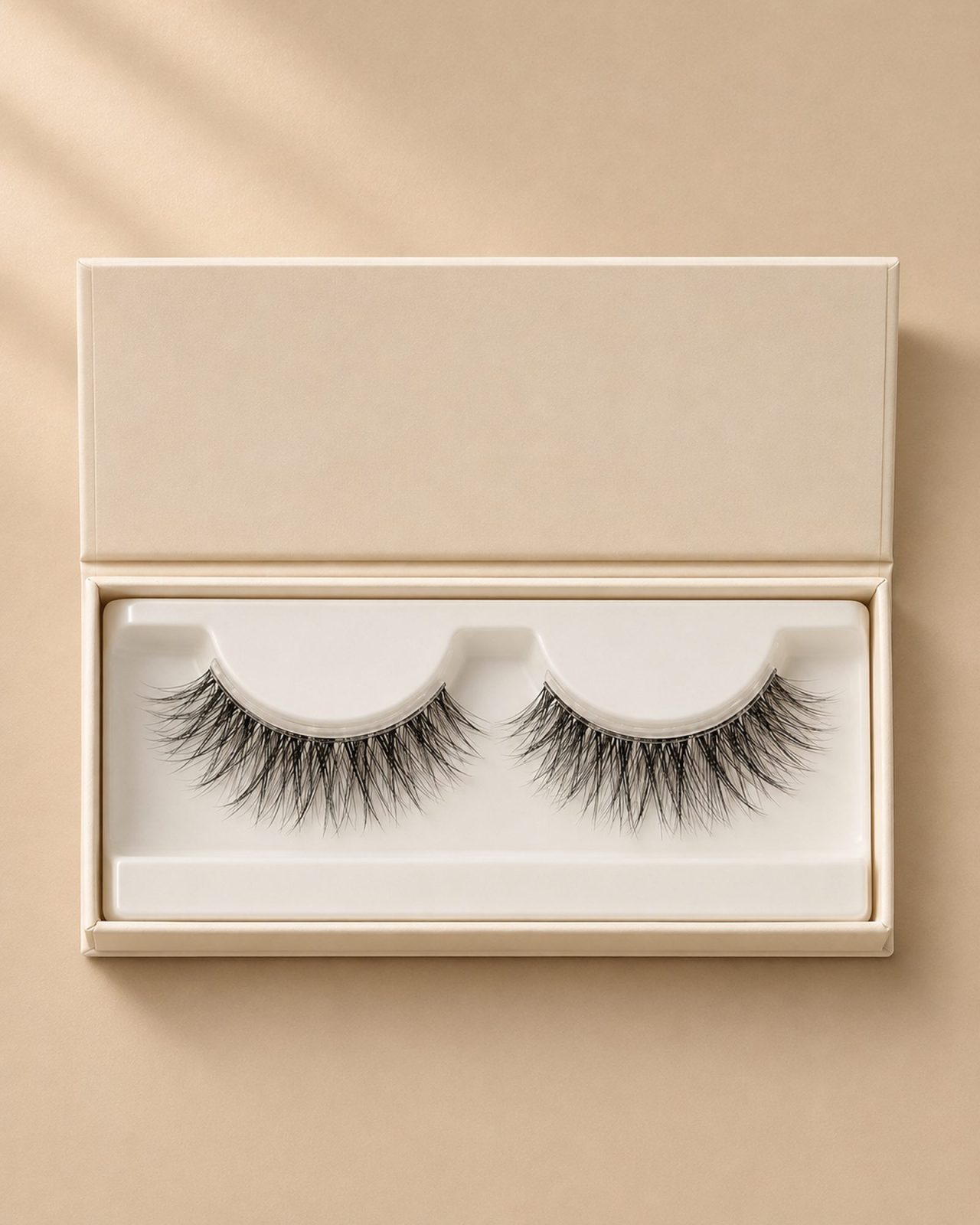
Logo, lash cards, boxes, sleeves, labels and colours can be discussed around your product category, target market and order quantity. Share a reference and we can review suitable options.
Related Lash Styles
-

Private Label Wispy Strip Lashes Collection
Strip Lashes
-
Natural Wispy Pre-Glued Strip Lashes
Strip Lashes
-
Clear Band Strip Lashes
False Eyelashes
-
Pre-Glued Half Strip Lashes
False Eyelashes
-
Lash Development
Styles and specifications shaped around your product brief.
-
Sample Review
Review samples and confirm specifications before bulk production.
-
Private Label Packaging
Coordinate lash cards, boxes, labels and brand presentation.
-
Order Coordination
Keep product, packaging and delivery details aligned.