
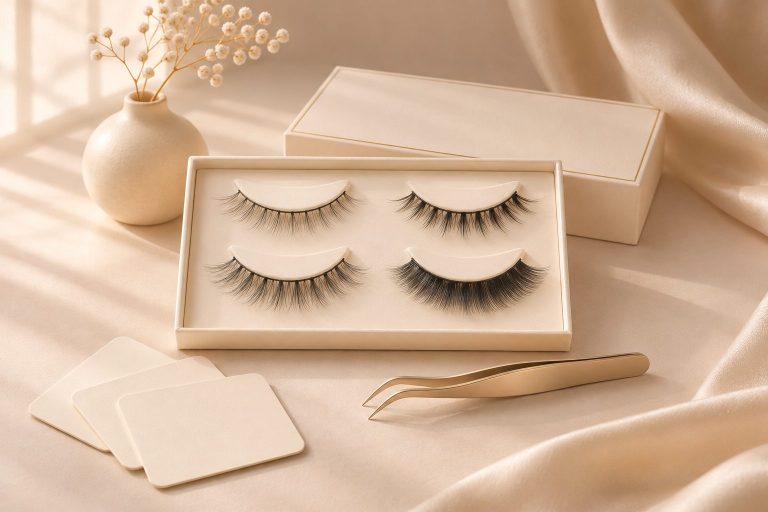

A successful lash capsule collection is not simply a group of attractive eyelash styles packaged under one name. It is a carefully considered product assortment in which every design contributes to the same brand identity while serving a distinct visual purpose.
For premium beauty brands, this balance can be difficult to achieve. Adding more styles may create the appearance of variety, but it can also lead to overlapping products, unclear differentiation and a collection that feels inconsistent.
The challenge is to create a recognizable design language without making every lash look the same.
This guide explains how beauty brands can plan a cohesive lash capsule collection, define the role of each style, identify unnecessary duplication and prepare a collection for custom product development.
What Is a Lash Capsule Collection?
A lash capsule collection is a deliberately focused group of eyelash designs developed around a shared aesthetic direction.
The concept is similar to a capsule wardrobe in fashion: rather than offering an unlimited number of unrelated options, the brand selects designs that work together as a recognizable family.
There is no universal number of styles that a lash capsule must contain.
Its size should reflect the intended audience, product positioning and commercial objectives.
A capsule may focus on a specific makeup aesthetic, such as understated elegance, modern soft glam or expressive editorial beauty. It may also explore a particular design language through different silhouettes and visual intensities.
What matters is that the collection has both cohesion and differentiation.
Cohesion means the designs appear to belong to the same creative universe.
Differentiation means customers and buyers can understand why each design deserves its own place in the range.
1. Start with a Clear Collection Identity
Before choosing individual lash styles, define the overall character of the collection.
This is a strategic design decision, not simply a packaging or naming exercise.
Ask what the collection should communicate about the brand.
Should it feel quiet and refined? Sculptural and fashion-oriented? Soft but visually defined? Modern and expressive?
A useful collection direction combines a clear aesthetic idea with several visual principles that can guide product development.
Define the Collection’s Design Codes
Design codes are recurring visual characteristics that connect different products.
For a lash collection, they may include:
- Silhouette language: How the collection approaches curves, emphasis and overall lash shape.
- Visual weight: Whether the range generally favors restrained density, defined focal areas or more expressive volume.
- Texture and spacing: How the designs use visible layers, separation and negative space.
- Color direction: Whether the aesthetic is built around black, brown, tonal combinations or another approved palette.
- Brand expression: The mood and styling philosophy that link the products together.
These codes should guide creativity without forcing every product to repeat the same construction.
For example, a collection could share a refined, airy aesthetic while exploring several clearly different silhouettes.
Alternatively, a more editorial collection could use stronger visual structure as its unifying principle while allowing each style to interpret that direction differently.
For further discussion of recognizable design identity, see our guide to developing a signature lash silhouette.
2. Give Every Lash Style a Specific Role
One of the most important decisions in capsule collection planning is defining why each product exists.
A well-structured collection should not rely on several nearly identical styles with different names.
Instead, each design should contribute a distinct visual expression or serve a clearly defined makeup intention.
Consider the following hypothetical four-style collection.
| Collection Role | Design Intention | Potential Differentiation |
|---|---|---|
| Everyday Refinement | An understated look with controlled visual weight | Restrained silhouette and delicate spacing |
| Soft Definition | Greater eye definition without an overly dramatic appearance | Different distribution of density and emphasis |
| Editorial Statement | A more expressive, recognizable visual composition | Intentional layering, focal points or stronger silhouette contrast |
| Accent Design | Selective visual emphasis for a specific makeup direction | A distinct shape or localized design approach |
This table is an illustrative planning model, not a catalog of four finished Pingdu Lashes products.
The objective is not to insist that every brand needs these four styles.
The objective is to demonstrate that every product should have a distinct reason to be included.
If two proposed styles address the same visual intention with only minor differences, the brand should consider whether both are necessary.
3. Build Variety Through Design, Not Just More SKUs
Product variety can come from meaningful differences in visual design.
However, changing a single detail does not always justify creating another product.
Brands should examine how different elements interact to establish a distinct overall appearance.
Silhouette
The silhouette establishes the most immediate visual character of a lash.
Changes in the distribution of length and emphasis may affect the overall shape, but the design should be evaluated as a complete composition rather than a list of isolated specifications.
Density and Visual Weight
Two styles with similar outlines may still express different aesthetics if their density and visual weight are meaningfully different.
However, increasing or reducing density slightly does not automatically create a new design identity.
Layering and Texture
Layering can be explored as a way to create visible structure and depth.
For example, our Sculpted Layered Strip Lashes page presents a proposed design direction based on intentional layering and silhouette.
As a concept, it illustrates how visual structure might inform an original product. Its final physical characteristics still require validation.
Color Composition
Color may also become a meaningful design element.
A brand exploring a coordinated palette could investigate a tonal relationship rather than relying solely on conventional single-color options.
Our Espresso-to-Black Tonal Gradient concept is an example of a proposed direction in which color placement becomes part of the creative brief.
The visual effect and manufacturing feasibility of such a concept must be confirmed through actual development.
Product Format
Different formats may serve different use cases, but a capsule collection does not need to include every possible lash format.
Combining full strips, half strips or other formats should be a deliberate product strategy, not a requirement for creating variety.
The brand should consider whether each format supports the intended customer experience and whether the collection remains visually coherent.
4. Use a Differentiation Matrix Before Approving the Collection
A differentiation matrix can help brand teams evaluate proposed styles side by side.
This is especially useful when multiple design references appear attractive but may lead to similar finished products.
For each proposed SKU, record the intended visual result and its most important distinguishing features.
| Review Question | What to Compare | Warning Sign |
|---|---|---|
| Does the style have a clear purpose? | Target look and intended customer use | Two styles have essentially the same role |
| Is the silhouette distinct? | Overall shape and placement of visual emphasis | Differences are visible only in the product name |
| Is the texture meaningfully different? | Layering, spacing and perceived density | Minor changes produce nearly identical appearances |
| Does the style fit the collection? | Shared design codes and aesthetic direction | The product looks unrelated to the others |
| Can the difference be demonstrated? | Visual references and eventually physical samples | The design team cannot explain the distinction clearly |
| Does the product justify development? | Strategic role, expected demand and development requirements | Another SKU adds complexity without a clear benefit |
This matrix is a planning aid rather than a validated industry scoring system.
Brands can adapt it to their product positioning and internal approval process.
5. Compare the Designs Without Their Names or Packaging
An effective way to identify unnecessary duplication is to compare the designs without relying on branding.
Remove the product names, collection descriptions and packaging concepts from the review.
Then consider the proposed silhouettes and visual references side by side.
Ask the review team:
- Can we describe a meaningful difference between these styles?
- Would the difference matter to the intended customer?
- Does each design represent a separate makeup intention?
- Could two styles be combined into one stronger product direction?
- Is one style more suitable as a future variation rather than a separate launch?
Before physical samples exist, this comparison can help evaluate the proposed design direction.
After samples are available, the same questions should be revisited using comparable photographs, consistent viewing conditions and agreed evaluation criteria.
Concept sketches cannot establish how distinct the physical products will ultimately appear.
6. Decide Which Designs Deserve Prototyping
Not every idea included in an early collection board needs to become a physical sample immediately.
Brands may benefit from separating essential collection styles from secondary variations and future concepts.
A proposed launch structure could include:
- Core designs: Styles that best express the collection’s intended identity.
- Complementary designs: Styles that add meaningful variety without undermining cohesion.
- Exploratory concepts: Ideas with creative potential that require further refinement or technical review.
These are suggested planning categories, not fixed product quantities or established Pingdu Lashes development stages.
Before prototyping, each selected design should have a clear creative objective and a defined set of questions for sample evaluation.
Our lash design prototyping readiness guide provides a framework for deciding whether a proposed concept is ready to move forward, requires revision or should be placed on hold.
Once samples exist, physical appearance, construction, consistency and other agreed requirements need to be evaluated before any final product approval.
7. Connect Packaging and Naming to the Design System
A cohesive capsule collection should feel recognizable beyond the individual lashes.
Product naming, packaging design, photography and presentation can support the same visual identity.
However, these elements should reinforce meaningful product differences rather than compensate for their absence.
For example, a brand might use a consistent packaging structure while assigning each design a distinct name and visual description related to its specific role.
Collection photography could maintain a shared lighting and styling approach while showing the differences between silhouettes clearly.
A premium presentation should help customers understand the relationship between the styles, not make every product appear identical.
Any physical packaging requirements, customization options, quantities and production feasibility must be confirmed as part of the actual project.
8. Consider Commercial Complexity Before Expanding the Range
Every additional product introduces decisions involving design approval, inventory planning, packaging, photography, merchandising and future replenishment.
That does not mean a smaller assortment is always better.
It means each addition should have a clear commercial purpose.
Before expanding a proposed capsule, brands can ask:
- Does this style address a distinct customer preference or makeup intention?
- Can the design be differentiated from existing products?
- Are the expected development and presentation requirements justified?
- Would the product strengthen or dilute the collection identity?
- Could the idea be introduced later after the initial range has been evaluated?
MOQ, sample costs, packaging requirements, production lead times and commercial availability should be confirmed with the relevant development and supply partners rather than assumed from a concept proposal.
9. A Practical Collection Planning Checklist
Before approving the initial collection direction, review the following questions.
- Have we defined the collection’s visual identity in clear language?
- Do we know which design codes should remain consistent?
- Does every proposed style have a distinct purpose?
- Have we compared the styles without relying on product names?
- Can we explain the difference between the proposed silhouettes?
- Have we identified which concepts require physical validation?
- Does the packaging direction support the overall collection identity?
- Have we considered the commercial implications of additional SKUs?
- Do we have a clear review process for prototypes and final samples?
If the team cannot answer several of these questions, it may be useful to refine the collection architecture before requesting physical development.
Developing an Original Lash Capsule with Pingdu Lashes
For brands interested in original lash development, a capsule collection provides a useful way to connect individual product concepts to a larger design vision.
Pingdu Lashes approaches custom lash discussions through the lens of design direction, visual differentiation and private label development.
Brands can begin a discussion by sharing their collection concept, aesthetic references and the intended role of each proposed style.
A practical starting package might include:
- a short brand and collection brief;
- the intended target customer and makeup direction;
- reference images or original sketches;
- a proposed style-by-style differentiation matrix;
- preferred visual characteristics and exclusions;
- the questions that physical samples should investigate;
- preliminary packaging and branding requirements.
This information can help structure an initial development discussion.
Specific design feasibility, physical samples, materials, packaging, quantities and commercial commitments must be confirmed for each project.
Frequently Asked Questions
How many lash styles should a capsule collection include?
There is no fixed number. A collection should contain enough distinct styles to support its intended customer and brand identity without adding unnecessary duplication. The appropriate size depends on product positioning and commercial requirements.
How can different lash styles still feel like one collection?
They can share consistent design codes, such as a recognizable aesthetic direction, related visual weight, coordinated color choices or a similar approach to texture. Each style should still have a distinct silhouette or intended role.
Should every style use the same lash material or band?
Not necessarily. Material and construction decisions should follow the intended product requirements and confirmed feasibility. A cohesive visual identity does not automatically require identical technical specifications.
Can an existing lash style be included in a new capsule collection?
Yes, if it fits the planned design language and has a clear role. Brands should assess whether it remains visually consistent with the collection and whether any proposed changes require new samples or approvals.
How can a brand avoid launching several styles that look almost identical?
Use a differentiation matrix, compare references without names or packaging, define each product’s role and revisit the comparison with physical samples before final approval.
Can a capsule collection be developed for a private label beauty brand?
A brand can propose an original capsule collection for custom development discussion. Feasibility, sample arrangements, specifications, packaging and production conditions should be reviewed individually rather than assumed.
Final Thoughts
The strongest lash capsule collection is not necessarily the one with the most styles.
It is the one in which every design has a purpose, the collection communicates a consistent aesthetic and the differences between products are meaningful.
For premium beauty brands, this approach creates a clearer foundation for creative development and a more considered product assortment.
Planning an original lash collection? Share your collection vision, design references and proposed style structure with Pingdu Lashes to discuss possible development directions.