Successful beauty brands can be useful benchmarks when developing a new product category.
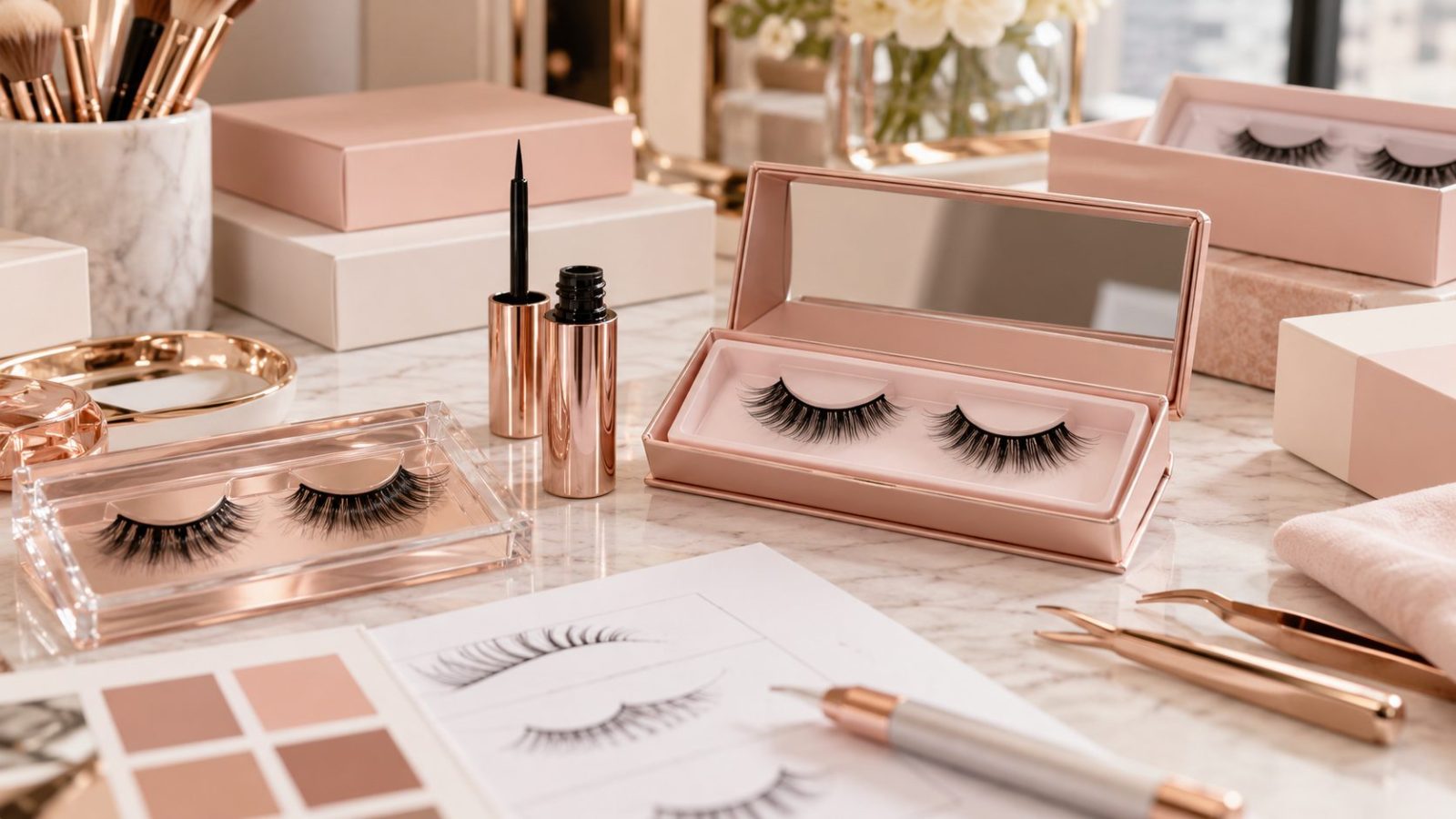
Glamnetic is one example of a brand that helped make magnetic lashes easier for consumers to understand by combining magnetic strip lashes with magnetic eyeliner and building a broader product system around different lash styles, liners and bundles.
For beauty brands, distributors and private label buyers, the opportunity is not to copy another brand’s logo, packaging or protected product design.
The real product development question is:
How can a beauty brand develop its own private label magnetic lash system with independent specifications, packaging, product positioning and customer experience?
This guide explains how buyers can use successful magnetic lash brands as market benchmarks while developing an original magnetic lash collection for their own target market.
Quick Answer: How Can a Brand Develop a Private Label Glamnetic Alternative?
A private label magnetic lash system can be developed by combining several coordinated product elements:
- Magnetic strip lashes
- Magnetic eyeliner
- Different lash styles and lengths
- Magnet placement and lash band structure
- Application tools
- Storage packaging
- Starter kits
- Replacement lash products
- Private label retail packaging
The objective should be to understand why magnetic lash systems are convenient for consumers and then develop an independent collection around your own target customer, price positioning and sales channels.
The final product should use your own brand identity, lash specifications, packaging artwork and product strategy.
Why Use Glamnetic as a Magnetic Lash Product Benchmark?
When entering a new beauty category, studying an established brand can help buyers understand how the product is presented to consumers.
A benchmark can help answer practical questions such as:
- Why would a customer choose magnetic lashes instead of traditional strip lashes?
- Should the brand sell lashes and liner separately or as a kit?
- How many lash styles should be included at launch?
- How should natural, wispy, cat-eye and dramatic styles be differentiated?
- Should one liner work across the full lash collection?
- Which products can generate repeat purchases?
- How should starter kits and replacement products be structured?
These questions are more useful than simply asking a supplier for a catalogue of magnetic lashes.
A strong private label project begins with the consumer experience and then works backward toward the product specifications.
A Magnetic Lash System Is More Than One Pair of Lashes
One of the most important lessons from successful magnetic lash brands is that the commercial opportunity is larger than one lash SKU.
The product can be developed as a system.
A basic magnetic lash system may include:
- Magnetic lash styles
- Magnetic eyeliner
- Application accessories
- Storage or protective cases
- Starter kits
- Replacement lashes
- Multiple liner formats
This gives beauty brands more flexibility when designing a product collection and can create additional repeat-purchase opportunities.
1. Define the Target Customer Before Developing the Lash
Different magnetic lash customers may expect very different products.
Before selecting samples, define the type of consumer the collection is intended for.
For example:
- Beginners may prefer shorter, lighter and easier-to-position lash styles
- Natural makeup customers may prefer subtle wispy lashes
- Glam customers may prefer denser and longer styles
- Cat-eye customers may prefer more length toward the outer corner
- Mature customers may prefer lightweight bands and moderate lengths
- Online beauty customers may respond well to clear style differentiation
The target customer should influence lash length, density, band structure, packaging and even the number of products included in the launch collection.
2. Develop the Magnetic Lash Structure
The lash itself is the core physical component of the system.
A private label magnetic lash should be evaluated for more than appearance.
Important factors include:
- Lash band flexibility
- Magnet size
- Magnet placement
- Weight distribution
- Inner-corner comfort
- Outer-corner stability
- Fiber softness
- Lash shape
- Overall finished appearance
The magnet layout should help the lash follow the eye shape without creating excessive stiffness.
More magnets do not automatically mean a better product.
The complete band structure, magnet position and liner compatibility should be tested together.
3. Evaluate Magnet Quantity and Placement
Magnet structure is one of the most important technical differences between magnetic lash products.
A brand may evaluate different configurations depending on the lash length and band design.
During sample testing, buyers should review:
- How evenly the magnets are distributed
- Whether the inner corner lifts during wear
- Whether the outer corner stays aligned
- Whether the lash can follow different eye curves
- Whether magnets create visible bulk
- Whether the lash remains comfortable after application
The final configuration should be selected based on the actual wearing experience rather than only the number of magnets stated in a specification sheet.
4. Build Several Clearly Different Lash Styles
A private label magnetic lash collection should not consist of many nearly identical styles.
Each SKU should serve a clear customer preference.
A practical launch collection might include:
Natural
A shorter, lighter magnetic lash designed for customers who want subtle everyday enhancement.
Wispy
A textured style with visible peaks and layered fibers for a softer modern lash effect.
Cat Eye
A style with more outer-eye length to create an elongated appearance.
Round / Open Eye
A lash with more emphasis toward the center to create a visually more open eye shape.
Dramatic
A fuller and longer style designed for customers looking for stronger visual impact.
Instead of launching twenty similar styles, a brand may achieve better merchandising with five or six clearly differentiated options.
5. Consider Different Lash Lengths for Different Customers
Length should be part of the collection strategy.
A private label range may include:
- Short everyday magnetic lashes
- Medium wispy magnetic lashes
- Longer cat-eye lashes
- Full dramatic lashes
Giving each product a clear length and style position makes the collection easier for customers to understand.
This is especially important for e-commerce brands where consumers cannot physically compare products before ordering.
6. Magnetic Liner Is a Core Part of the Product System
A magnetic lash cannot be evaluated independently from the magnetic liner used with it.
The liner and lash should function as one system.
When developing magnetic liner samples, buyers may evaluate:
- Application control
- Brush or pen format
- Drying behavior
- Magnetic attraction
- Finished appearance
- Comfort
- Wear performance
- Removal experience
- Compatibility with different magnetic lash styles
A strong lash paired with a poorly performing liner can still create a poor customer experience.
For this reason, the lash and liner should always be tested together before commercial production.
7. Liquid Magnetic Liner or Magnetic Eyeliner Pen?
Different customers may prefer different application formats.
A liquid magnetic liner may suit users who are already comfortable applying traditional liquid eyeliner.
A magnetic eyeliner pen may provide a more familiar format for customers who prefer greater application control.
A brand can decide whether to:
- Launch only one liner format
- Offer both liquid and pen formats
- Include one format in starter kits
- Sell alternative liners as separate replacement products
The decision should be based on target customer behavior, manufacturing capability and the complexity the brand wants to manage during the first launch.
8. Consider Black, Brown or Other Liner Directions
Black liner is a natural starting point for many magnetic lash systems because it works with traditional eye makeup positioning.
However, a brand may also evaluate other directions depending on its audience.
For example:
- Black liner for classic lash looks
- Brown liner for softer makeup styles
- Alternative liner concepts for differentiated product collections
The liner color should be considered together with the target lash style and the overall visual identity of the collection.
9. Develop the Lash and Liner as One System
This is one of the most important parts of magnetic lash development.
Do not approve the lashes from one supplier sample and the liner from another sample without testing the final combination.
The complete system should be evaluated for:
- Magnetic attraction
- Band positioning
- Inner-corner attachment
- Outer-corner attachment
- Comfort
- Application time
- Appearance
- Removal
- Customer usability
A private label beauty product is successful only when the components work together in the way the customer expects.
10. Decide Whether to Sell Individual Products or Starter Kits
A magnetic lash brand can use several commercial structures.
One option is to sell the magnetic lashes and liner separately.
Another option is to create a starter kit.
A private label starter kit may include:
- One pair of magnetic lashes
- Magnetic liner
- Application tool
- Storage tray or case
- Application instructions
- Custom retail packaging
A starter kit can make it easier for first-time customers to understand what they need to use the product.
Replacement lashes and liner can then be sold separately as repeat-purchase items.
11. Build a Repeat-Purchase Strategy
A good magnetic lash system should be designed beyond the first transaction.
A product ecosystem might include:
- Magnetic Lash Starter Kit
- Natural Magnetic Lash
- Wispy Magnetic Lash
- Cat Eye Magnetic Lash
- Dramatic Magnetic Lash
- Replacement Magnetic Liner
- Alternative Liner Format
- Lash Storage Case
This creates a more complete product line than selling only one magnetic lash style.
For distributors and beauty brands, the system also creates more opportunities for collection expansion after the first launch.
12. Private Label Packaging Should Explain the Product Clearly
Magnetic lashes may be unfamiliar to customers who have previously used only traditional glue-on strip lashes.
Packaging therefore needs to communicate how the system works.
Private label packaging may include:
- Custom logo
- Brand colors
- Lash style name
- Lash length or effect
- Kit contents
- Application steps
- Magnetic liner instructions
- Removal information
- Barcode
- Product warnings where applicable
- Market-specific labeling information
A visually attractive box is important, but clear product communication is equally important.
13. Do Not Copy Glamnetic Packaging or Brand Identity
Using a successful brand as a benchmark does not mean reproducing its visual identity.
Buyers may study:
- The product category
- The lash and liner relationship
- The starter kit concept
- The range of lash styles
- The repeat-purchase structure
- The way the product solves an application problem
But a private label collection should use its own:
- Brand name
- Logo
- Packaging artwork
- Product names
- Lash specifications
- Magnet configuration
- Accessories
- Marketing positioning
Brands should independently review trademark, patent, design and other intellectual property considerations relevant to their target market before launching a commercial product.
14. Start With Physical Benchmark Samples
When a buyer wants to develop a product inspired by a successful market category, physical benchmark samples can make product communication more accurate.
A development team can evaluate:
- Lash band structure
- Magnet position
- Magnet size
- Lash fiber
- Length
- Density
- Eye shape
- Magnetic liner format
- Packaging structure
- Application process
The objective is not to reproduce every detail.
The objective is to understand the target user experience and identify which characteristics should be maintained, improved or changed for the new brand.
15. Develop Several Sample Combinations
It is often useful to compare more than one lash and liner combination during development.
For example, a buyer may test:
- Different lash band flexibility
- Different magnet configurations
- Different natural lash styles
- Different cat-eye styles
- Liquid liner versus pen liner
- Different application tools
- Different packaging structures
This makes it easier to identify which combination offers the best balance of appearance, usability and manufacturing consistency.
16. Test the Product on Different Eye Shapes
A magnetic lash that works well on one eye shape may not perform exactly the same on another.
Sample evaluation should consider several user profiles where possible.
Buyers can review:
- Band fit
- Inner-corner comfort
- Outer-corner stability
- Lash length
- Overall proportion
- Application difficulty
This is especially important for brands selling across broad consumer markets through Amazon, Shopify, TikTok Shop or beauty retail channels.
17. Review Magnetic Liner Documentation Before Printing Packaging
Magnetic eyeliner is different from the lash itself because it is a cosmetic formulation.
Before commercial production, buyers should confirm the documentation required for the intended sales market.
Depending on the formulation and destination, buyers may need to review:
- Ingredient information
- INCI information
- Product specifications
- Safety documentation
- Production source
- Label requirements
- Batch information
- Target-market compliance requirements
These details should be confirmed before final packaging artwork is approved and printed.
18. Place a Pilot Order Before Scaling
A development sample shows that a supplier can produce one approved sample.
It does not automatically prove that the same specifications can be reproduced consistently in commercial quantities.
A pilot order can help evaluate:
- Lash consistency
- Magnet placement consistency
- Liner consistency
- Kit assembly
- SKU accuracy
- Packaging accuracy
- Production communication
- Final inspection
For established brands and distributors, this can be an important step before transferring a larger order.
You can also read our guide on how to test a new lash supplier before moving your orders.
19. Plan Repeat-Order Consistency From the Beginning
Once a magnetic lash collection begins selling, repeat-order consistency becomes critical.
The manufacturer or product development partner should maintain clear references for:
- Lash style
- Fiber specification
- Lash length
- Band structure
- Magnet configuration
- Liner formulation reference
- Applicator model
- Packaging version
- SKU code
A buyer should not have to rebuild the product from the beginning every time a repeat order is placed.
20. Build a Magnetic Lash Collection Instead of One Isolated Product
One magnetic lash SKU may be useful for testing demand, but established beauty brands can create stronger product positioning by developing a structured collection.
For example:
| Collection Direction | Possible Product |
| Everyday | Short Natural Magnetic Lash |
| Soft Glam | Medium Wispy Magnetic Lash |
| Cat Eye | Outer-Length Magnetic Lash |
| Glam | Long Volume Magnetic Lash |
| Starter Product | Magnetic Lash + Liner Kit |
| Repeat Purchase | Replacement Magnetic Liner |
This makes the product range easier for consumers, distributors and retail buyers to understand.
What Should I Send a Manufacturer to Develop a Glamnetic-Style Magnetic Lash System?
A buyer can normally begin development by providing:
- Physical benchmark samples or product references
- Target customer profile
- Target sales market
- Preferred lash effects
- Preferred lash lengths
- Desired magnet structure
- Preferred liner format
- Starter kit requirements
- Packaging concept
- Expected order quantity
- Target launch schedule
If certain features are particularly important, such as band flexibility, magnet position or liner application, they should be identified at the beginning of the project.
Can a Distributor Develop Its Own Magnetic Lash Brand?
Yes.
Distributors that already understand their local beauty market can use successful magnetic lash products as market research and develop an independent collection under their own brand.
This gives the distributor more control over:
- Product selection
- Lash style
- Retail positioning
- Packaging
- Starter kits
- Replacement products
- Collection expansion
A private label magnetic lash program can be especially useful for distributors looking for a differentiated product category rather than another generic strip lash SKU.
Magnetic Lashes vs DIY Cluster Lash Systems
Magnetic lashes and DIY underlash cluster systems solve similar customer needs in different ways.
Magnetic lashes are based around a full strip and magnetic attachment system, while DIY cluster systems use multiple smaller lash segments and adhesive-related products.
Brands deciding between the two categories should consider:
- Target customer
- Application difficulty
- Desired finished look
- Kit complexity
- Refill strategy
- Retail positioning
Brands interested in a DIY underlash system can also read our guide on how to develop a private label Lashify alternative or review our Private Label DIY Cluster Lash Kit.
Pingdu Lashes Support for Private Label Magnetic Lash Development
Pingdu Lashes supports beauty brands, distributors and professional buyers with eyelash product development, sample coordination, private label packaging and repeat-order management.
For magnetic lash projects, buyers can provide an existing benchmark product, physical samples or a detailed product concept.
Development may include:
- Magnetic lash style selection
- Lash structure evaluation
- Magnet configuration development
- Magnetic liner coordination
- Application tool sourcing
- Sample revisions
- Starter kit development
- Private label packaging
- Pilot-order evaluation
- Multi-SKU collection planning
We work with specialized manufacturing partners across different eyelash categories and coordinate development according to the requirements of each project.
If you are developing a magnetic lash system for your beauty brand, visit our Custom Service page to discuss your target product, benchmark samples, packaging requirements and expected order quantity.
Frequently Asked Questions
Can a manufacturer develop a private label Glamnetic alternative?
Yes. An established magnetic lash brand can be used as a market benchmark while developing an independent magnetic lash system with your own lash specifications, liner, accessories, packaging and brand identity.
Can I customize the magnetic lash styles?
Yes. Natural, wispy, cat-eye, round-eye and dramatic styles can be developed with different lengths, densities and lash effects.
Can I customize the number and position of magnets?
Magnet configuration can be discussed during product development. The final structure should be tested for band flexibility, attachment, comfort and compatibility with the magnetic liner.
Can I develop my own magnetic eyeliner?
Private label magnetic liner options can be evaluated according to the project. Buyers should review formulation information, packaging, documentation and target-market requirements before commercial production.
Can I choose liquid liner or an eyeliner pen?
Different liner formats may be available depending on the manufacturing solution. Brands can test the application experience and decide which format best matches their target customer.
Can magnetic lashes and liner be sold as a starter kit?
Yes. A starter kit can combine magnetic lashes, magnetic liner, application accessories, instructions and custom retail packaging.
Can I sell replacement lashes and liner separately?
Yes. Replacement lashes and magnetic liner can become separate SKUs and help create a broader repeat-purchase product system.
Should I send a Glamnetic product as a benchmark sample?
A physical market benchmark can help communicate the target customer experience, lash structure and system concept more clearly. The final product should still use independent specifications, branding and packaging.
Should I test the magnetic lash and liner together?
Yes. The lash, magnets and magnetic liner should be evaluated as one complete system before approving commercial production.
Should I place a pilot order before a large launch?
For established brands and distributors, a pilot order can help verify magnet placement, lash consistency, liner performance, packaging accuracy and kit assembly before larger-scale production.



