For beauty brands and distributors, successful products such as Lashify can provide a useful benchmark for understanding how consumers use at-home lash extension systems.
But developing a private label Lashify alternative is not simply about sourcing a tray of cluster lashes.
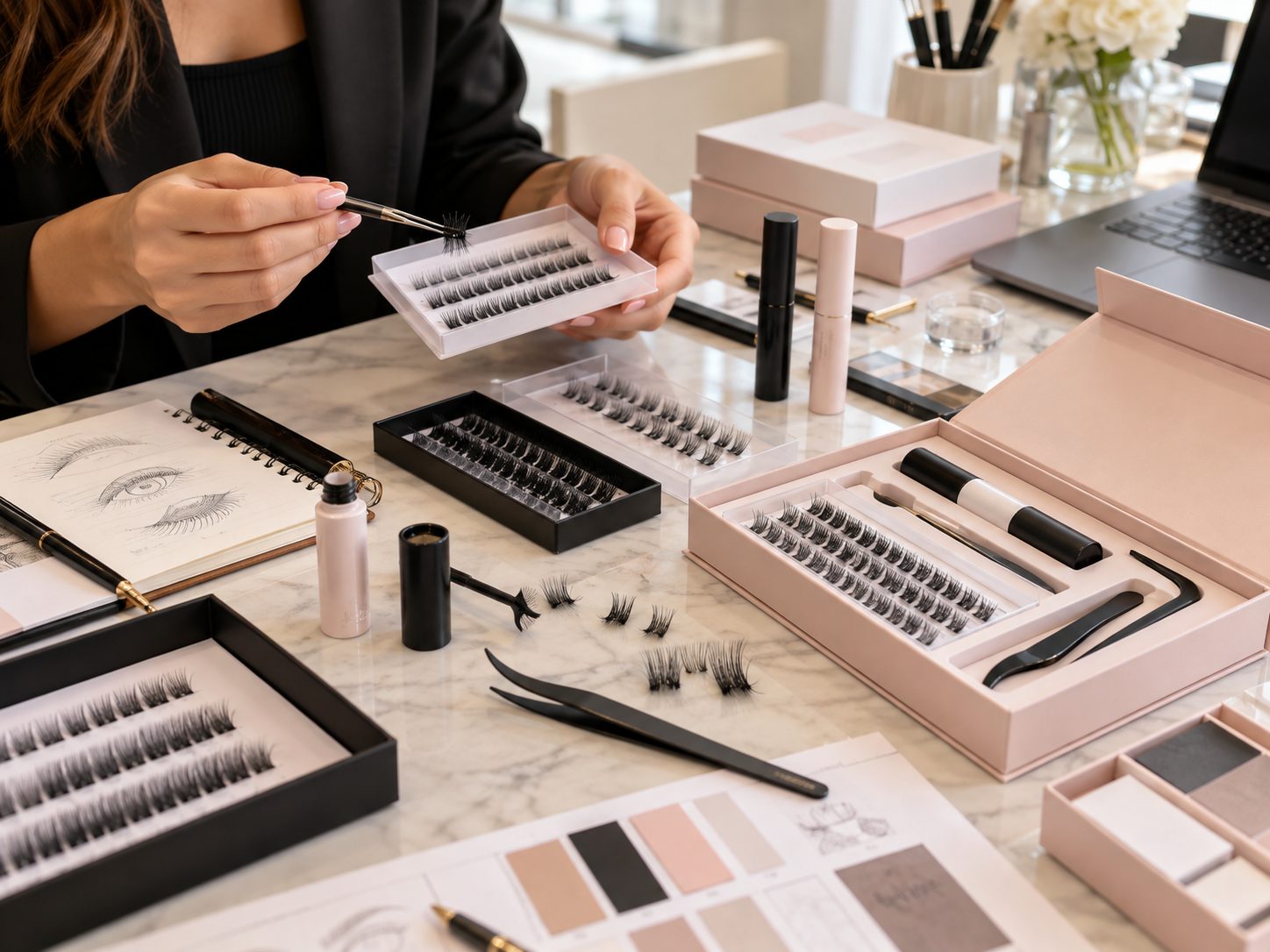
A complete DIY lash extension kit is a product system. It may involve underlash clusters, bond, seal, an applicator, removal products, tray design, instructions, packaging and refill options.
The real product development question is:
How can a beauty brand build its own independent DIY lash extension system with a similar consumer use case, while creating its own specifications, packaging and brand identity?
This guide explains how distributors and established beauty brands can approach that development process.
Quick Answer: How Can a Brand Build a Private Label Lashify Alternative?
A private label DIY lash extension kit can be developed by using a successful at-home lash system as a market benchmark and then creating an independent product around your own customer, price point and brand strategy.
A typical development project may include:
- DIY underlash clusters
- Bond
- Seal
- Lash applicator
- Removal product
- Mixed-length lash mapping
- Custom tray design
- Application instructions
- Private label retail packaging
- Refill products
The goal is not to reproduce another brand’s logo, packaging or protected design.
The goal is to understand why the product system works and develop your own private label version for your target market.
Why Use Lashify as a Product Development Benchmark?
Beauty brands often study successful products before developing a new category.
A benchmark helps answer practical questions:
- What problem is the product solving?
- How many components are needed?
- How does the customer apply the product?
- What should be included in the starter kit?
- Which items can later become refill products?
- How can different lash styles become separate SKUs?
For a distributor, this is more useful than beginning with a generic supplier catalogue and trying to build a product line without a clear consumer experience.
A Lashify Alternative Should Be a System, Not Just a Lash Tray
One of the most important lessons from successful DIY lash extension brands is that they do not sell only lashes.
They sell a complete application system.
For a private label brand, that means the commercial product should be considered as several connected components rather than one isolated SKU.
A basic system may include:
- Starter kit
- Lash clusters
- Bond and seal
- Applicator
- Removal solution
- Replacement clusters
This structure can create more opportunities for repeat purchasing than a single disposable lash product.
1. Define the Customer Before Choosing the Product Structure
Before developing samples, define the customer you are trying to serve.
Different customers may want very different DIY lash experiences.
For example:
- Beginners may prefer simple lash maps and lighter styles
- Experienced users may prefer more styling flexibility
- Natural makeup customers may prefer shorter, softer clusters
- Glam customers may prefer longer or denser lash designs
The target consumer should influence the cluster styles, kit contents, packaging and instructions.
2. Decide Whether the Product Will Use Underlash Application
DIY lash extension systems are often positioned differently from traditional strip lashes because the clusters may be applied beneath the natural lash line.
This creates a different finished appearance and application experience.
When developing an underlash system, evaluate:
- Cluster base width
- Base flexibility
- Fiber softness
- Cluster weight
- Application angle
- Compatibility with the applicator
The lash cluster and the application method should be developed together.
3. Develop the Lash Cluster Collection
The lashes are still the visual core of the system.
A private label collection can include several style directions.
Natural
Balanced density and shorter lengths for customers who want an everyday lash effect.
Wispy
Layered fibers and uneven peaks for a softer, more textured result.
Cat Eye
Longer outer-eye clusters designed to create a more elongated shape.
Soft Volume
A fuller effect for customers who want more visible density without an excessively heavy appearance.
A distributor does not need to launch too many styles at once.
A smaller collection of clearly differentiated styles is often easier to test and manage.
4. Build a Useful Length Map
A DIY lash extension kit should not simply contain random mixed lengths.
The lengths should help the customer create a predictable lash look.
A typical map may include:
- Shorter inner-eye lengths
- Medium center lengths
- Longer outer-eye lengths
Different maps can also be developed for natural, doll-eye, cat-eye or wispy looks.
For brands, lash mapping can become part of the product identity and help customers understand how to use the kit.
5. Bond Is a Core Product, Not Just an Accessory
In a DIY lash extension system, bond performance directly affects the customer experience.
The bond should be evaluated for:
- Application control
- Initial tack
- Compatibility with the lash base
- Finished appearance
- Comfort
- Removal process
Beauty brands should not select the lash cluster first and treat the bond as an afterthought.
The two products should be tested together as one system.
6. Seal Can Improve the Overall System Experience
A seal product may be used after application depending on the final system design.
Its role may include helping manage tackiness or improving the finished application experience.
If a kit includes both bond and seal, the brand should test:
- How the two products work together
- The correct application sequence
- Packaging compatibility
- Instruction clarity
- Customer usability
These details become increasingly important when selling through retail or e-commerce channels where customers apply the product without professional assistance.
7. The Applicator Should Be Tested With the Final Lash Design
The applicator is another important part of the system.
A visually attractive applicator is not enough.
It should work effectively with the actual lash cluster.
Important factors may include:
- Tool shape
- Grip area
- Tension
- Tip alignment
- Ease of placing clusters beneath the natural lash line
The applicator, lashes and bond should therefore be evaluated as one application system.
8. Consider a Removal Product
For a complete DIY lash extension system, removal should be considered during product development rather than after launch.
A removal product can make the system easier for customers to understand and gives the brand more control over the complete product experience.
If a remover is included, brands should also consider:
- Container format
- Instructions
- Packaging layout
- Compatibility with the adhesive system
- Target-market documentation requirements
9. Build a Starter Kit and Refill Strategy
This is one of the strongest commercial opportunities in a DIY lash extension system.
Instead of selling only one kit, a brand can develop a product ecosystem.
For example:
- Starter Kit
- Natural Lash Refill
- Wispy Lash Refill
- Cat Eye Lash Refill
- Bond Replacement
- Seal Replacement
- Applicator Replacement
- Removal Product
This structure gives customers a reason to return to the brand after buying the initial kit.
10. Private Label Packaging Should Explain the System Clearly
A multi-component product can become confusing if the packaging does not clearly explain how everything works.
Private label packaging may include:
- Custom logo
- Brand colors
- Product name
- Style identification
- Length information
- Kit contents
- Application steps
- Removal instructions
- Barcode
- Retail information
The objective is to create an independent product identity rather than visually reproducing another brand’s packaging.
11. Use Lashify as a Benchmark, Not as a Design to Copy
There is an important difference between benchmarking a successful product and copying a brand.
A brand may study:
- The product category
- The application system
- The kit structure
- The customer problem being solved
- The refill strategy
- The product positioning
But the final private label product should have its own:
- Brand name
- Logo
- Packaging artwork
- Lash specifications
- Accessory selection
- Instructions
- Marketing positioning
Brands should independently review any trademark, patent, design or other intellectual property issues relevant to their target market.
12. Start With Physical Benchmark Samples
If a distributor wants to develop a product inspired by a specific market benchmark, physical samples can make communication much clearer.
A development team can evaluate:
- Lash cluster structure
- Fiber softness
- Lengths
- Curl
- Bond format
- Seal format
- Applicator structure
- Tray layout
- Packaging size
The purpose is to understand the target experience and then decide which parts should remain similar and which should be changed for the new brand.
13. Develop Samples as a Complete Kit
Do not approve every component separately and assume they will automatically work together.
The final sample should be evaluated as a complete system.
Testing should include:
- Lash appearance
- Bond application
- Cluster placement
- Applicator compatibility
- Seal performance
- Finished lash appearance
- Removal process
- Packaging presentation
If you are comparing several manufacturing partners, our guide on how to compare lash samples from different suppliers can help structure the evaluation process.
14. Review Documentation for Bond, Seal and Removal Products
A DIY lash extension kit may contain cosmetic or adhesive-related components in addition to the lashes themselves.
Before commercial production, buyers should confirm what documentation is required for their target market.
Depending on the product and destination, this may include:
- Ingredient information
- Product specifications
- Safety documentation
- Label information
- Production source information
These requirements should be discussed early in the sourcing process rather than after packaging has already been printed.
15. Place a Pilot Order Before a Large Launch
A sample proves that a supplier can produce a development sample.
It does not automatically prove that the supplier can manage commercial production.
A pilot order helps test:
- Batch consistency
- Kit assembly
- SKU accuracy
- Packaging accuracy
- Component coordination
- Production communication
- Final inspection
Established brands evaluating a new supplier can also read our guide on how to test a new lash supplier before moving larger orders.
16. Think About Repeat Orders Before the First Order
A strong DIY lash system should be designed for repeat production from the beginning.
The supplier should maintain clear records for:
- Lash style
- Length map
- Cluster specifications
- Bond specification
- Seal specification
- Applicator model
- Packaging version
- SKU codes
Repeat-order consistency becomes particularly important when a brand begins selling multiple refill styles or several versions of the starter kit.
What Should I Send a Manufacturer if I Want to Develop a Lashify Alternative?
A buyer can normally begin by providing:
- The benchmark kit or clear product references
- The target customer
- Preferred lash styles
- Preferred length ranges
- Desired kit contents
- Packaging concept
- Target market
- Estimated order quantity
- Expected launch schedule
If certain components are especially important, such as the bond, applicator or tray structure, they should be identified clearly at the beginning of development.
Can a Distributor Build Its Own DIY Lash Extension System?
Yes.
A distributor can use a successful product category as market research and develop an independent system under its own brand.
This is especially relevant for distributors that already understand their local beauty market and want greater control over:
- Product selection
- Brand positioning
- Retail pricing
- Packaging
- Product assortment
- Repeat-purchase strategy
Pingdu Lashes Support for DIY Lash Extension Kit Development
Pingdu Lashes supports beauty brands, distributors and professional buyers with eyelash product development, sample coordination, private label packaging and repeat-order management.
For DIY lash extension kit projects, buyers can provide an existing market benchmark, physical samples or a detailed product concept.
We work with specialized manufacturing partners across different eyelash categories and can help coordinate:
- DIY lash cluster selection
- Style development
- Length mapping
- Sample revisions
- Kit component coordination
- Packaging development
- Pilot-order evaluation
- Multi-SKU requirements
You can review our Private Label DIY Cluster Lash Kit or visit our Custom Service page to discuss a product development project.
Frequently Asked Questions
Can a manufacturer develop a private label Lashify alternative?
Yes. A market product such as Lashify can be used as a benchmark for developing an independent DIY lash extension system with your own lash styles, kit configuration, packaging and brand identity.
What should be included in a private label DIY lash extension kit?
A kit may include underlash clusters, bond, seal, an applicator, removal products, instructions and custom retail packaging depending on the target market and product concept.
Can I customize the lash styles?
Yes. Natural, wispy, cat eye, soft volume and other styles can be developed with different lengths, curls and density directions.
Can I develop refill products?
Yes. Lash refills, bond, seal and other replacement items can be developed as separate SKUs within the same product system.
Can I send a Lashify kit as a benchmark sample?
A physical benchmark can help communicate the target application experience, kit structure and product positioning more clearly. The final private label product should still use independent specifications, packaging and branding.
Should the bond and lashes be tested together?
Yes. The lash cluster, bond, seal and applicator should be evaluated as a complete application system before commercial production.
Should I place a pilot order before launching?
For established brands and distributors, a pilot order can help verify product consistency, kit assembly, packaging accuracy and production management before larger volumes are transferred.



